
Digital Signatures in Blockchain: How they work with examples
0 1158
Blockchain technology relies on several cryptographic concepts to create secure and verifiable digital transactions. While hashing helps protect data integrity, digital signatures help prove who authorized a transaction.
Digital signatures are one of the most important concepts for anyone learning blockchain development. They are used in cryptocurrencies such as Bitcoin and Ethereum to authenticate transactions and prove that a transaction was authorized by the owner of the relevant private key.
In this guide, we will understand what digital signatures are, how they work in blockchain, their components, real-world examples, and how developers can implement the basic concept using code.
It provides three important properties: 1. Authentication – helps prove who authorized the data. 2. Integrity – helps detect whether the signed data has been changed. 3. Non-repudiation – provides evidence that the holder of the private key authorized the message, although the exact legal meaning depends on the system and jurisdiction. A simplified process looks like:
Blockchain systems commonly use both.
What happens if the message changes? Suppose Alice signs:
What is a Digital Signature?
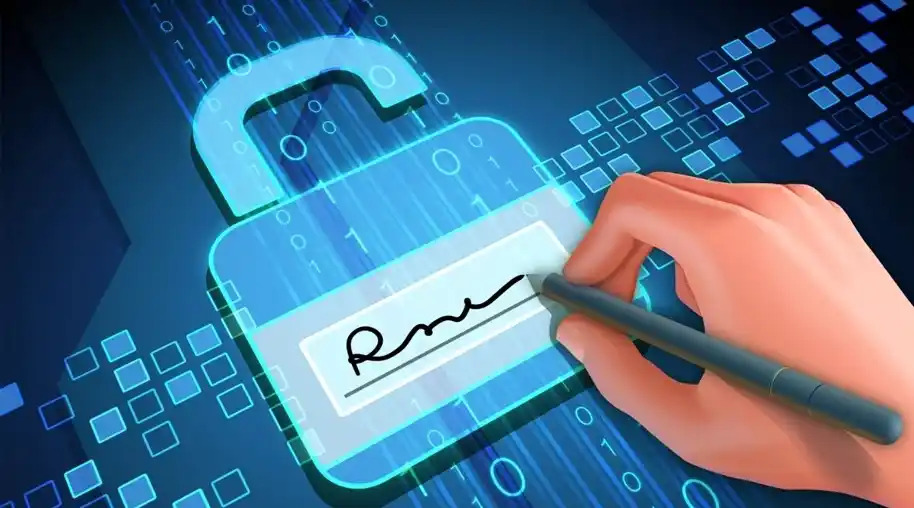
A digital signature is a cryptographic mechanism used to prove that a message, transaction, or piece of data was authorized by the holder of a specific private key.It provides three important properties: 1. Authentication – helps prove who authorized the data. 2. Integrity – helps detect whether the signed data has been changed. 3. Non-repudiation – provides evidence that the holder of the private key authorized the message, although the exact legal meaning depends on the system and jurisdiction. A simplified process looks like:
Private Key + MessageUnlike a handwritten signature, a digital signature is based on mathematical cryptography.
↓
Digital Signature
↓
Network verifies using Public Key
Simple Real-Life Example
Imagine Alice wants to send Bob a digital message: "I approve the payment of Rs. 10,000." Bob needs confidence that: • Alice actually approved it. • The message was not changed. • Someone else did not simply create the approval. Alice can use her private key to digitally sign the message. Bob can then use Alice’s public key to verify the signature. If the signature is valid, Bob has cryptographic evidence that the message was signed using the corresponding private key and that the signed message has not been altered.Private Key and Public Key
Digital signatures use a public-private key pair.Private Key
The private key must remain secret. It is used to create digital signatures. Private Key ↓ Create SignaturePublic Key
The public key can be shared. It is used to verify signatures. Public Key ↓ Verify Signature The relationship can be summarized as: Private Key → Sign Public Key → Verify This is fundamental to blockchain accounts and wallets.How Digital Signatures work in Blockchain
Let's consider a simplified cryptocurrency transaction. Alice wants to send 1 BTC to Bob. Step 1: Alice Creates a Transaction Alice → Bob Amount: 1 BTC Step 2: Transaction Data Is Hashed The transaction data is processed using the blockchain’s cryptographic mechanisms. Transaction ↓ Hash ↓ Transaction Digest Step 3: Alice Signs the Transaction Alice uses her private key to create a digital signature associated with the transaction. Private Key + Transaction Data ↓ Digital Signature Step 4: Transaction Is Broadcast The transaction and relevant signature information are sent to the blockchain network. Step 5: Nodes Verify the Signature Network participants verify that the signature corresponds to the transaction and the expected public key. If verification succeeds, the transaction can proceed to further validation and eventual inclusion in a block.Why are Digital Signatures Important?
Without digital signatures, a blockchain would have difficulty proving that a transaction was authorized by the owner of the relevant cryptographic credentials. For example, suppose someone broadcasts: Alice → Bob: 100 BTC The network needs to determine whether the transaction was actually authorized by Alice. A digital signature provides cryptographic evidence that the transaction was signed using the corresponding private key. This helps prevent unauthorized transactions.Digital Signatures and Blockchain Wallets
A blockchain wallet does not simply “store coins” like a physical wallet stores cash. For many blockchain systems, wallets manage cryptographic keys and provide tools for signing transactions. For example: Wallet ↓ Private Key ↓ Sign Transaction ↓ Broadcast Transaction The blockchain network can then verify the signature. This is why protecting a private key or recovery phrase is extremely important. If someone obtains your private key or the necessary wallet credentials, they may be able to authorize transactions as you.Digital Signature vs Electronic Signature
These terms are often confused. An electronic signature can be any electronic indication of agreement, such as typing a name or clicking “I Agree.” A digital signature is a specific cryptographic technique based on public-key cryptography. For example:Electronic Signature:Digital signatures are therefore a technical mechanism, while electronic signatures can be a broader legal or operational category.
"I Agree"
Digital Signature:
Cryptographic signature generated using a private key
Digital Signatures vs Hashing
Hashing and Digital Signatures are related but serve different purposes.| Hashing | Digital Signature |
| Product a hash/digest | Produces a signature |
| Helps detect data changes | Helps prove authorization |
| Generally one-way | Can we verified using a public key |
| No private key required | Uses a private key |
| Used for integrity | Used for authentication and integrity |
Common Digital Signature Algorithm
Different blockchain networks use different cryptographic algorithms. ECDSA Elliptic Curve Digital Signature Algorithm (ECDSA) is widely used. Bitcoin has historically used ECDSA with the secp256k1 elliptic curve for its standard public-key signatures. EdDSA EdDSA is another family of digital signature schemes. Some modern blockchain and cryptographic systems use Ed25519, an EdDSA scheme. Schnorr Signatures Schnorr signatures are another important signature scheme. Bitcoin supports Schnorr signatures through Taproot, introduced with Bitcoin’s 2021 upgrade. Different algorithms have different characteristics and implementation requirements.Simple Digital Signature Example Using Python
Developers can experiment with digital signatures using cryptographic libraries. For example, the following conceptual example uses the cryptography library: from cryptography.hazmat.primitives.asymmetric import ed25519# Generate a private keyThe important idea is:
private_key = ed25519.Ed25519PrivateKey.generate()
# Get the public key public_key = private_key.public_key()
message = b"Approve payment of 1000"
# Sign the message
signature = private_key.sign(message)
# Verify the signature
public_key.verify(signature, message)
print("Signature is valid!")
MessageThe exact cryptographic algorithm used in a real blockchain depends on the blockchain protocol.
+
Private Key
+
Signature
+
Public Key
+
Verification
What happens if the message changes? Suppose Alice signs:
Transfer Rs. 1000 to BobThe original signature should no longer verify against the modified message. Conceptually:
At attackers changes it to:
Transfer Rs. 10,000 to Bob
Original MessageThis protects the integrity of signed transaction data.↓Valid Signature
Modified
↓
Invalid Signature
Digital Signature in Bitcoin
A simplified transaction flow is:User Wallet ↓ Creates Transaction ↓ Signs with Private Key ↓ Broadcasts Transaction ↓ Bitcoin Nodes Verify Signature ↓ Valid Transaction ↓ Included in BlockBitcoin’s transaction model and signature system are technically more complex than this simplified flow, but the basic principle is the same.
Digital Signature in Ethereum
Ethereum also uses cryptographic signatures to authorize transactions. For example, when a user sends ETH or interacts with a smart contract, their wallet signs the transaction before broadcasting it. A simplified example: User ↓ Wallet ↓ Private Key Signs Transaction ↓ Ethereum Network ↓ Signature Verification ↓ Transaction Processing Ethereum uses ECDSA over the secp256k1 curve for externally owned accounts (EOAs).What If a Private Key Is Lost?
One of the biggest characteristics of blockchain systems is that there may be no central authority that can simply reset a lost private key. If you lose access to the private key or the wallet’s recovery mechanism, you may permanently lose the ability to authorize transactions from that account. For this reason: • Never share your private key. • Never share your seed phrase. • Avoid storing sensitive wallet credentials in insecure locations. • Use reputable wallet software. • Consider hardware wallets for significant holdings.
Advantages of Digital Signatures
Digital signatures provide several benefits: • Strong cryptographic authentication • Data integrity verification • Authorization of blockchain transactions • Reduced dependence on centralized identity systems • Protection against unauthorized transaction modification • Efficient verification by network participants
Digital signatures provide several benefits: • Strong cryptographic authentication • Data integrity verification • Authorization of blockchain transactions • Reduced dependence on centralized identity systems • Protection against unauthorized transaction modification • Efficient verification by network participants
Limitations and Security Risks
Digital signatures are powerful, but they are not magic. Security depends heavily on protecting the private key. Potential risks include: • Private key theft • Malware • Phishing attacks • Poor key management • Vulnerable wallet software • Weak operational security A perfectly secure signature algorithm cannot protect a private key that has already been stolen.
Conclusion
Digital signatures are a fundamental component of blockchain technology. They allow users to cryptographically authorize transactions and prove control of the corresponding private key. The basic concept is straightforward: Private Key → Sign → Public Key → Verify When combined with hashing, consensus mechanisms, distributed networks, and cryptographic addresses, digital signatures enable blockchain networks such as Bitcoin and Ethereum to process transactions without requiring a traditional central authority to approve every transaction. For developers learning blockchain, understanding digital signatures is essential before moving into advanced topics such as wallet development, transaction signing, smart contracts, Web3 applications, cryptographic key management, and blockchain security. Most importantly, remember one rule: Your private key is your authorization. Protect it like the most valuable credential you own.
Digital signatures are a fundamental component of blockchain technology. They allow users to cryptographically authorize transactions and prove control of the corresponding private key. The basic concept is straightforward: Private Key → Sign → Public Key → Verify When combined with hashing, consensus mechanisms, distributed networks, and cryptographic addresses, digital signatures enable blockchain networks such as Bitcoin and Ethereum to process transactions without requiring a traditional central authority to approve every transaction. For developers learning blockchain, understanding digital signatures is essential before moving into advanced topics such as wallet development, transaction signing, smart contracts, Web3 applications, cryptographic key management, and blockchain security. Most importantly, remember one rule: Your private key is your authorization. Protect it like the most valuable credential you own.

Share:


Comments
Waiting for your comments