
What is Blockchain
0 1441
A Beginner’s Guide with Real-World Examples
Blockchain is one of the most talked-about technologies in the world of software, finance, and digital transformation. It powers cryptocurrencies such as Bitcoin and Ethereum, but its applications go far beyond digital currencies.
In simple terms, blockchain is a digital system for recording and sharing information in a secure, transparent, and tamper-resistant way.
Unlike a traditional database controlled by a single organization, a blockchain can distribute a copy of its records across a network of computers. This makes it possible for participants to verify information without depending entirely on one central authority.
But how does blockchain actually work? Let's understand it with simple examples.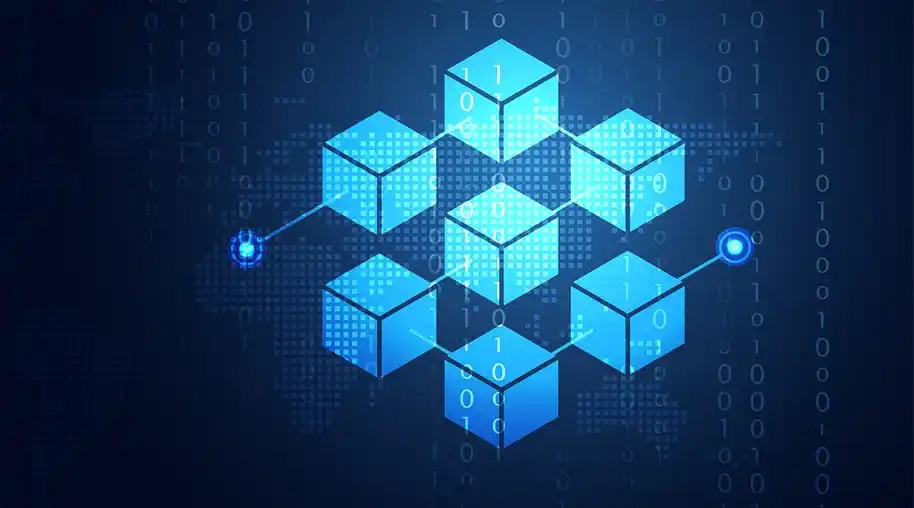
The previous block's hash creates a connection between blocks. If someone tries to modify information stored in an earlier block, its hash changes, potentially breaking the chain and alerting the network. A Simple Example
For example, a patient's medical record could contain a verifiable history of updates and access.
However, privacy regulations and data-storage requirements must be carefully considered. 4. Digital Identity Blockchain can also support digital identity systems.
For example, a person could have a digitally verifiable credential that can be presented to an organization without repeatedly submitting physical documents.
This could be useful for education certificates, professional qualifications, or other credentials.
5. Education
Universities and training institutions can issue digital certificates that are cryptographically verifiable.
For example:
For a simple company employee-management system, a traditional database may be much more practical.
Blockchain becomes more interesting when multiple parties need to share and verify records without completely trusting a single central authority.
What is Blockchain?
A blockchain is a distributed digital ledger that stores information in groups called blocks. These blocks are connected to one another in chronological order, creating a chain—hence the name "blockchain." Each block generally contains:Transaction or data information
A timestamp
A unique cryptographic hash
The hash of the previous block
The previous block's hash creates a connection between blocks. If someone tries to modify information stored in an earlier block, its hash changes, potentially breaking the chain and alerting the network. A Simple Example
Imagine that three people—Amit, Rahul, and Priya—are maintaining a shared notebook.the other copies can be compared with the altered version. Since the information doesn't match, the change can be detected. Blockchain applies a much more sophisticated version of this concept using cryptography, computers, and consensus mechanisms.
Amit writes:
Amit paid Rahul Rs. 500.
Rahul and Priya also have copies of this notebook.
If someone changes Amit's entry to:
Amit paid Rahul Rs. 5,000.
How does Blockchain works?
Let's break the process down into simple steps.A transaction or record is created
Suppose Alice wants to send 1 Bitcoin to Bob. A transaction is created containing information about the sender, receiver, and amount.The Transaction is Broadcast to the Network
The transaction is shared with computers participating in the blockchain network. These computers are often called nodes.The Network Verifies the Transaction
The network checks whether the transaction is valid. For example, in a cryptocurrency network, it may verify whether Alice actually has sufficient funds and whether the transaction has been properly authorized.Transactions are added to a Block
Once verified, transactions can be grouped together into a block.The Block is added to the Blockchain
Depending on the blockchain's consensus mechanism, participating nodes agree that the block should become part of the chain. The new block references the previous block's cryptographic hash.The Ledger is updated
Copies of the blockchain are updated across participating nodes, making the latest record available throughout the network.What is a Block?
A block can be thought of as a container that stores information. For example, a simplified block might look like this:Block #102
Data:
Alice → Bob: 1 BTC
Rahul → Priya: 0.5 BTC
Previous Hash:
7f83b165...
Current Hash:
9a21c874...
Timestamp:The actual structure of a blockchain block is more complex, but this example helps explain the basic concept.
10 August 2026, 10:30 AM
What is a Hash in Blockchain?
A hash is a unique-looking string generated from data using a cryptographic hash function. For example:Even:
Hello Blockchain
Hash:If even a small part of the original input changes, the resulting has changes significantly. For example:
3f7a9c...xyz
Hello Blockchain
> Hash A
Hello BlockchainThe difference in capitalisation can produce a completely different hash. This property helps blockchain systems detect unauthorized changes to stored information.
> Hash B
Why is Blockchain considered secure?
Blockchain security comes from several technologies and mechanisms working together. Cryptography Cryptographic techniques protect transactions and help verify identities and data integrity. Decentralization Instead of keeping records on only one central server, blockchain networks can distribute records among multiple participants. Consensus Participants use a consensus mechanism to agree on which transactions or blocks should be accepted. Immutability Once information has been recorded and sufficiently confirmed on many blockchain systems, changing historical data becomes extremely difficult. However, it is important to understand that blockchain is not automatically 100% secure. Smart contract bugs, stolen private keys, poorly designed applications, and vulnerabilities in surrounding systems can still create security risks.What is Decentralization?
Decentralization is one of blockchain's most important concepts. Consider a traditional banking system. You have a bank account, and the bank maintains the official record of your balance. The bank acts as a central authority. Blockchain can distribute the ledger across a network of computers. Instead of relying on a single organization to maintain the complete record, multiple participants can maintain and verify copies. This does not mean every blockchain is completely decentralized. Different blockchain networks have different governance and technical structures.Real-World examples of Blockchain
Blockchain technology has applications beyond cryptocurrency. 1. Cryptocurrency Bitcoin is the most famous example. Blockchain allows Bitcoin transactions to be recorded on a distributed ledger without requiring a traditional bank to maintain the transaction history. Ethereum is another major blockchain platform that supports cryptocurrency as well as programmable applications. 2. Supply Chain Management Imagine a supermarket selling organic coffee. The journey could involve: Farmer > Processor > Distribution > Warehouse > Retailer > Customer Blockchain could be used to record important events at different stages. A customer could potentially scan a QR code and access information about where the product came from and how it moved through the supply chain. 3. Healthcare Healthcare organizations deal with sensitive patient information. Blockchain-based systems could potentially help create secure and verifiable records while allowing authorized parties to access appropriate information.For example, a patient's medical record could contain a verifiable history of updates and access.
However, privacy regulations and data-storage requirements must be carefully considered. 4. Digital Identity Blockchain can also support digital identity systems.
For example, a person could have a digitally verifiable credential that can be presented to an organization without repeatedly submitting physical documents.
This could be useful for education certificates, professional qualifications, or other credentials.
5. Education
Universities and training institutions can issue digital certificates that are cryptographically verifiable.
For example:
Student: Priya SharmaAn employer could verify whether the certificate is genuine without relying solely on manually checking documents.
Qualification: Full Stack Development
Institution: XYZ Institute
Year: 2026
Verification ID: ABC123
Blockchain vs Traditional Database
Blockchain vs Traditional Databases are not competitors in every situation. They are designed for different requirements.| Feature | Blockchain | Traditional Database |
| Control | Distributed or Shared | Usually centralized |
| Data changes | Highly controlled | Generally easier |
| Transparency | Can be high | Depends on access |
| Speed | Often slower | Centralized applications |
| Best suited for shared trust and verification centralized applications | ||
Blockchain becomes more interesting when multiple parties need to share and verify records without completely trusting a single central authority.
What are Smart Contracts?
A smart contract is a program deployed on a blockchain that automatically executes predefined rules. For example:If payment is receivedImagine purchasing a digital asset. Instead of requiring a person to manually confirm every step, a smart contract can execute the programmed conditions automatically. Platforms such as Ethereum are widely associated with smart contracts.
THEN transfer digital ownership
Advantages of Blockchain?
Blockchain can offer several potential benefits:- Increased transparency
- Data integrity
- Traceability
- Reduced dependence on intermediaries
- Automated transactions through smart contracts
- Shared records among multiple participants
- Improved verification of digital information
Challenges of Blockchain
Blockchain also has limitations
Scalability
Some blockchain networks can struggle to process very large numbers of transactions quickly.
Energy Consumption
Certain consensus mechanisms, particularly Proof of Work, can require significant computational resources.
Regulation
Governments around the world are still developing regulatory frameworks for different blockchain applications.
Complexity
Developing and maintaining blockchain applications requires specialized technical knowledge.
Privacy
A transparent ledger is not necessarily appropriate for storing sensitive personal information directly.
Conclusion
Blockchain is much more than the technology behind Bitcoin. It is a new approach to recording, verifying, and sharing digital information across multiple participants.
Its key concepts—including blocks, hashes, decentralization, consensus, and smart contracts—make it particularly useful in situations where transparency, traceability, and trust are important.
From cryptocurrency and supply chains to digital credentials and decentralized applications, blockchain continues to create new possibilities for developers and businesses.
However, blockchain is not the right solution for every problem. The best approach is to first understand the business or technical requirement and then determine whether blockchain provides a genuine advantage over a traditional database or centralized system.
For developers, learning blockchain fundamentals today can provide a valuable foundation for exploring Web3, smart contracts, decentralized applications (DApps), digital assets, and the future of distributed technology.

Share:



Comments
Waiting for your comments