
Cross-Platform XR
0 1211
🌠Cross-Platform XR: Building Immersive Experiences That Work Everywhere
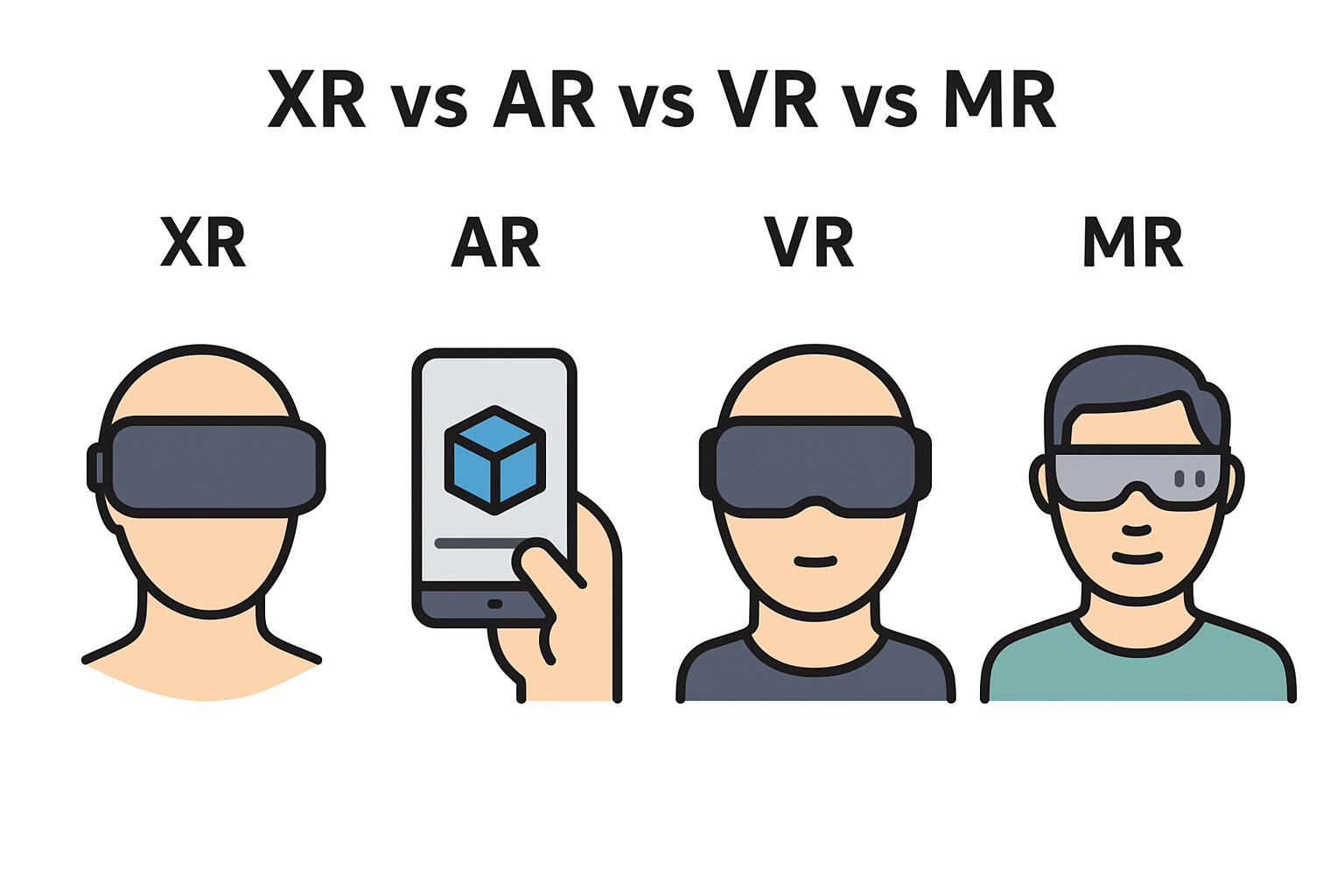
Cross-Platform XR is becoming the backbone of modern immersive development, allowing creators to build AR, VR, and MR applications that work smoothly across multiple devices, engines, and ecosystems. As hardware diversity expands, the need for unified workflows has never been greater. This blog breaks down the essentials of developing XR experiences that scale across platforms—clean, flexible, and future-ready.🚀 What Exactly Is Cross-Platform XR?
Cross-Platform XR refers to immersive content designed to run consistently on AR headsets, VR devices, smartphones, PCs, and web-based XR environments. Instead of building separate versions for every device, developers rely on common APIs, abstraction layers, and SDKs that streamline compatibility.The goal is simple: Write once, deploy everywhere.
🧩 Why Cross-Platform XR Matters Today
The XR ecosystem is fragmented—Meta Quest, HoloLens, Vision Pro, Vive headsets, Android ARCore devices, iOS ARKit devices, and WebXR browsers all have different technical demands. Cross-Platform XR ensures:- ⚡ Faster development cycles
- 📦 Reduced maintenance and fewer device-specific bugs
- 🌠Broader reach across user bases
- 🔄 Easier long-term updates and scaling
- 💰 Lower development and production costs
ðŸ› ï¸ Common Frameworks Used for Cross-Platform XR
Here are the leading technologies powering multi-device XR deployment:- OpenXR – The open standard unifying device communication
- Unity XR Plugin Management – Abstracted XR integration with one workflow
- Unreal Engine OpenXR – Native XR support with high fidelity
- WebXR – Browser-based immersive content
- AR Foundation – Cross-platform AR using ARCore + ARKit
💻 Example Code: Basic WebXR Session Start
Below is a simple example showing how to check for XR support and start a session using WebXR API:
// Check if WebXR is available
if (navigator.xr) {
    navigator.xr.isSessionSupported("immersive-vr").then((supported) => {
        if (supported) {
            // Start XR session
            navigator.xr.requestSession("immersive-vr").then((session) => {
                console.log("XR session started:", session);
                // Set up rendering and input here
            });
        } else {
            console.log("VR not supported on this device.");
        }
    });
} else {
    console.log("WebXR API not available in this browser.");
}
🔄 Challenges in Cross-Platform XR (And How to Handle Them)
Even with modern XR standards, developers face obstacles such as:- 🎯 Device-specific performance variations
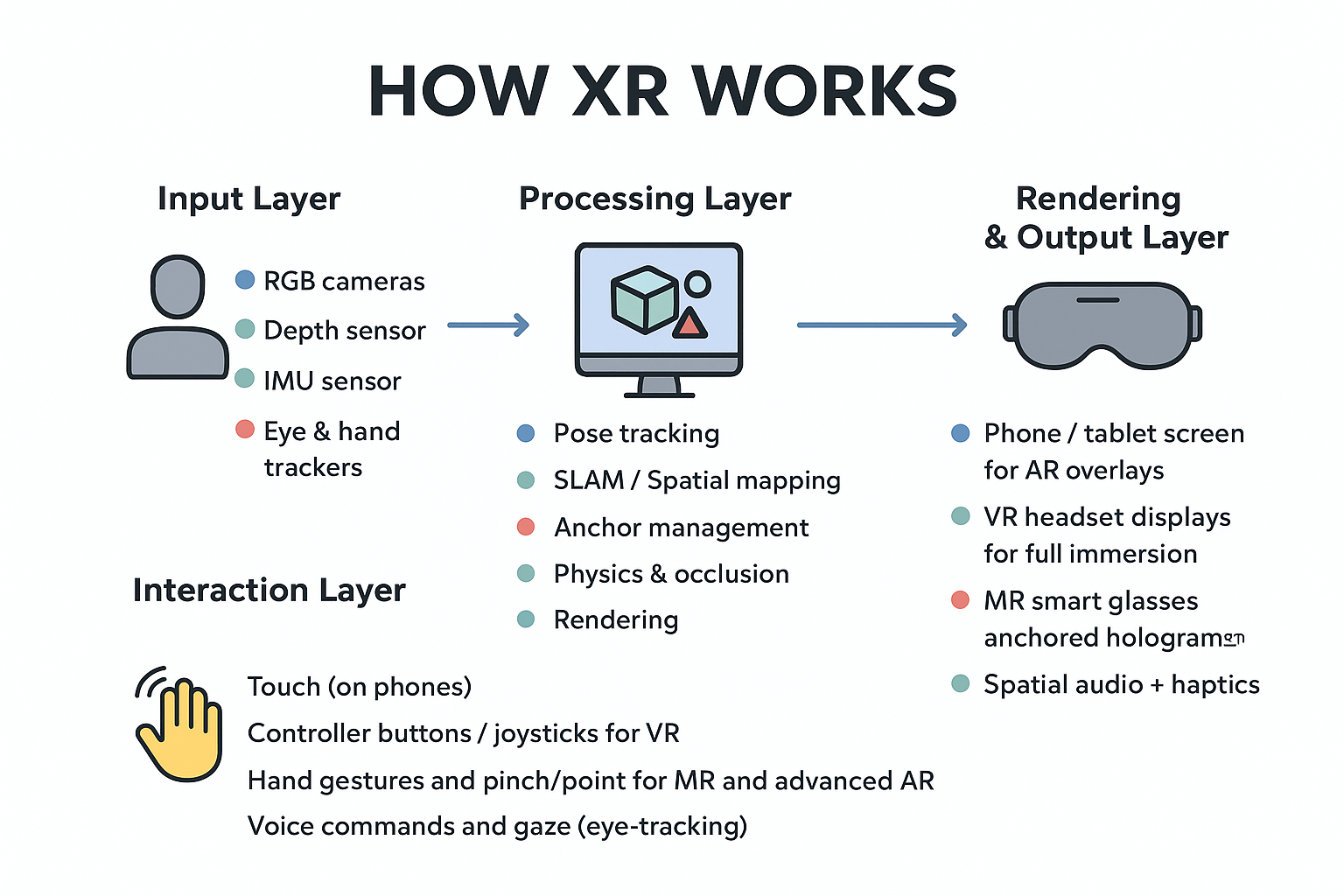
- 🎮 Input method differences (controllers, gestures, eye-tracking)
- 📠Display resolution and tracking accuracy variations
- 🔌 Platform-specific permissions and system integrations
- Using OpenXR for uniform API access
- Leveraging abstraction layers like XR Interaction Toolkit
- Adaptive scaling for performance differences
- Fallback interaction support for non-XR devices
🌠The Future of Cross-Platform XR
We are heading toward a world where XR experiences behave just like websites—seamlessly accessible on any device. With WebXR growing, OpenXR maturing, and engines refining XR pipelines, developers can expect:- âš™ï¸ More unified XR hardware standards
- 📱 Device-agnostic immersive ecosystems
- â˜ï¸ Cloud-rendered XR experiences
- 🔗 Cross-device continuity and shared sessions
🧾 Final Thoughts
Cross-Platform XR bridges the gap between diverse XR devices, allowing developers to deliver seamless, accessible, and future-proof experiences. When you adopt common standards like OpenXR, WebXR, and engine-agnostic plugins, your XR content becomes more adaptive and globally scalable.The future of immersive tech belongs to creators who build for everyone—not just one device.
If you’re passionate about building a successful blogging website, check out this helpful guide at Coding Tag – How to Start a Successful Blog. It offers practical steps and expert tips to kickstart your blogging journey!
For dedicated UPSC exam preparation, we highly recommend visiting www.iasmania.com. It offers well-structured resources, current affairs, and subject-wise notes tailored specifically for aspirants. Start your journey today!

Share:



Comments
Waiting for your comments