
XR SDKs Overview
0 907
🔎 What is XR SDKs Overview?
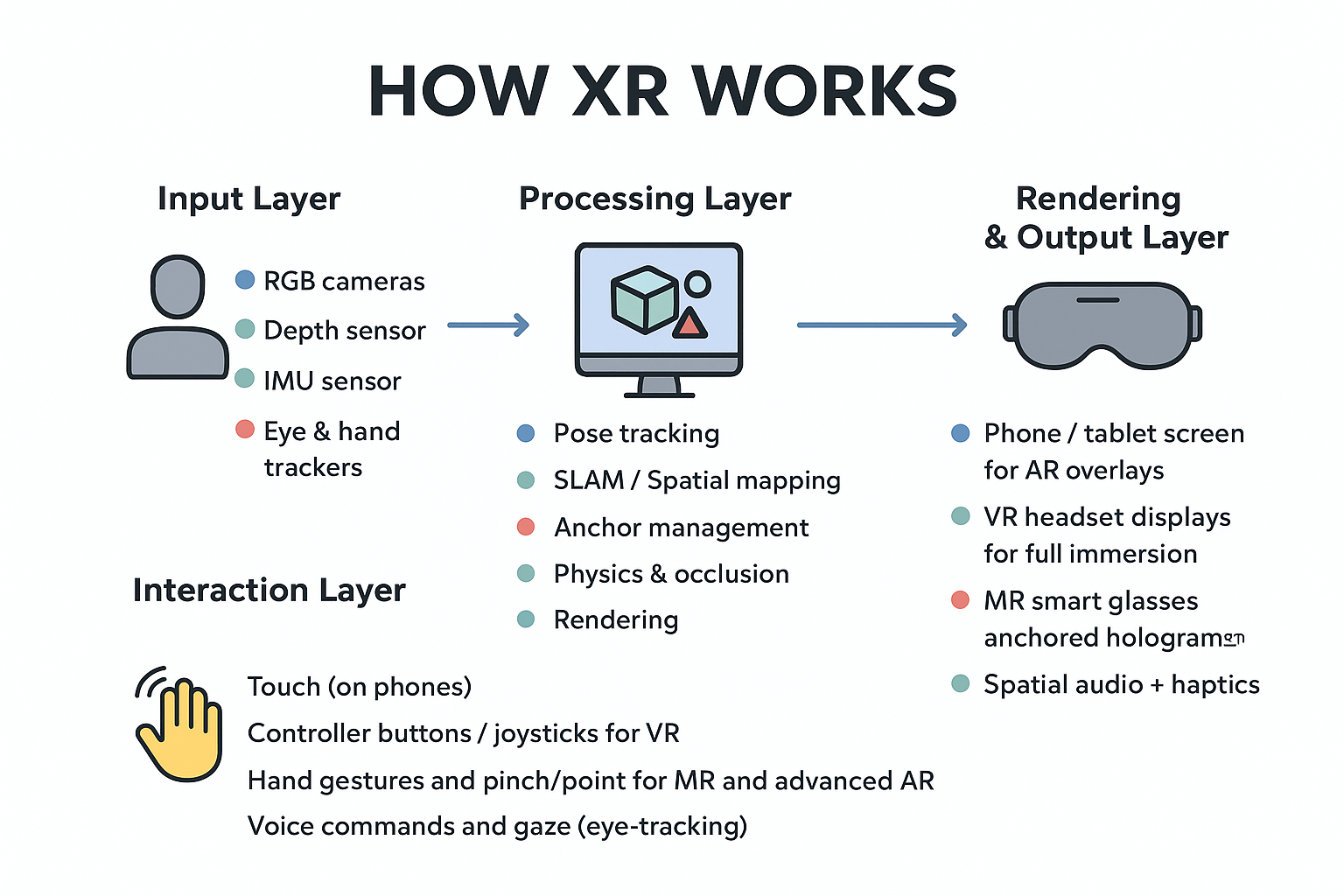
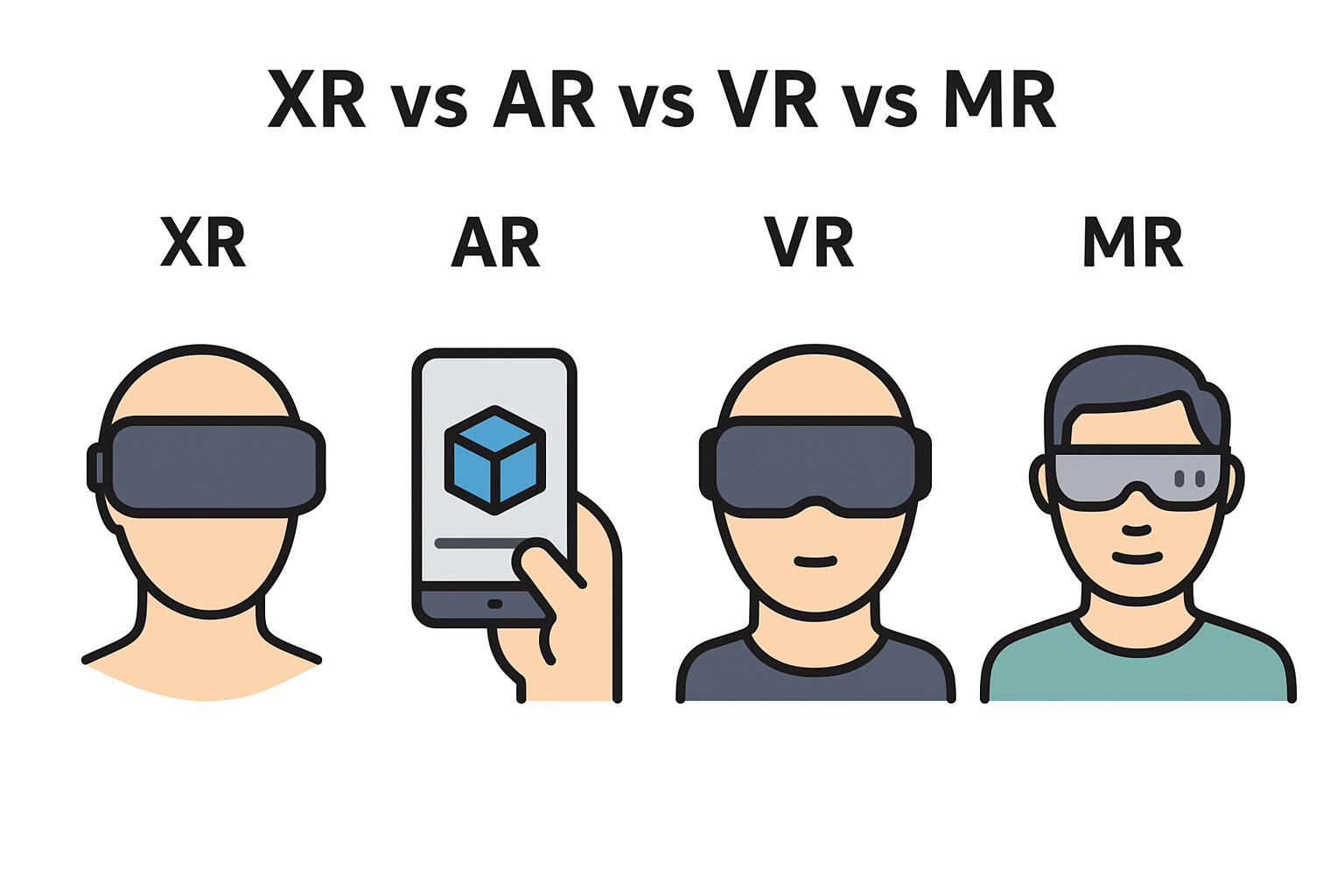
XR SDKs Overview covers the collection of software libraries, runtimes, and toolkits developers use to build virtual reality (VR), augmented reality (AR), and mixed reality (MR) experiences. These SDKs provide device access (tracking, input), rendering helpers, interaction frameworks, and deployment pipelines so your immersive app works across headsets, phones, and browsers.🧠Why understanding XR SDKs matters
Picking the right SDKs affects performance, compatibility, and development velocity. Some SDKs are cross-platform (OpenXR, WebXR), while others are device-specific (ARCore, ARKit, Oculus SDK). XR SDKs Overview helps teams decide trade-offs: fidelity vs. reach, fast prototyping vs. low-level control, or native features vs. standardization.🧩 Major SDK categories you'll see in XR SDKs Overview
- Standard runtimes: OpenXR (cross-vendor runtime standard)
- Mobile AR toolkits: ARCore (Android), ARKit (iOS)
- Engine integrations: Unity XR, Unreal XR
- Web: WebXR APIs for browsers
- Device SDKs: Oculus SDK, Magic Leap SDK, Pico SDK, HoloLens APIs
- Interaction toolkits: XR Interaction Toolkit, VR Expansion Plugin, Unreal Motion Controller frameworks
âš™ï¸ How OpenXR fits into XR SDKs Overview
OpenXR aims to be the common denominator — a unified API that reduces platform fragmentation. Many engines and device vendors provide OpenXR runtimes so apps written to the OpenXR spec run on multiple headsets with minimal changes.🛠Quick example — detect XR support in a Web app (WebXR)
This small JavaScript snippet shows a safe feature check and requests an immersive session if available. Works in modern browsers that expose WebXR.
// WebXR: check for support and request a session
async function startWebXR() {
  if (navigator.xr && await navigator.xr.isSessionSupported('immersive-vr')) {
    const session = await navigator.xr.requestSession('immersive-vr');
    console.log('WebXR session started', session);
    // session handling and rendering loop goes here
  } else {
    console.warn('WebXR immersive-vr not supported on this device/browser');
  }
}

startWebXR();
🔧 Unity example — basic XR initialization (C#)
In Unity, you typically enable XR Plugin Management and then programmatically check availability. This snippet shows a short pattern for verifying the loader and toggling XR subsystems.
using UnityEngine;
using UnityEngine.XR.Management;

public class XRStarter : MonoBehaviour {
    IEnumerator Start() {
        var xrManager = XRGeneralSettings.Instance.Manager;
        yield return xrManager.InitializeLoader();
        if (xrManager.activeLoader == null) {
            Debug.LogWarning("No XR loader available");
        } else {
            xrManager.StartSubsystems();
            Debug.Log("XR subsystems started: " + xrManager.activeLoader.name);
        }
    }
}
📦 Unreal tip — enabling OpenXR & XR plugins
In Unreal, open the Plugins window and enable OpenXR plus any vendor-specific plugins (Oculus, Magic Leap, etc.). Use the XR template to get built-in pawn & motion controller logic. Blueprint examples in this article are conceptual pseudocode for common interaction flows.🔠Interaction & Input: common patterns across SDKs
Regardless of SDK, interaction patterns repeat: raycast-based selection, direct grab (physics attach), gesture recognition, and haptics. Toolkits like Unity’s XR Interaction Toolkit or Unreal’s Motion Controller templates implement these patterns so you can reuse them rather than writing from scratch.📈 Performance considerations in XR SDKs Overview
- Target high, stable frame rates (72–120fps depending on headset).
- Use foveated or variable-rate rendering where available.
- Minimize draw calls and prefer instancing for repeated geometry.
- Profile on target devices — mobile/performance trade-offs differ widely.
🔠Security & privacy notes for XR SDKs
XR SDKs often require access to sensitive device sensors (camera, spatial mapping). Follow best practices:- Request permissions explicitly and explain why you need them.
- Minimize telemetry and anonymize spatial data where possible.
- Provide users controls to delete stored anchor or mapping data.
🧠Choosing SDKs — questions to ask (XR SDKs Overview checklist)
- Which target devices and platforms must you support?
- Do you need low-level device features or is a cross-platform layer enough?
- Is rapid prototyping (Blueprints/Visual Scripting) valuable for your team?
- What are your performance and latency targets?
- How will you handle input fallbacks and accessibility?
🔮 The future direction highlighted by XR SDKs Overview
Expect tighter runtime convergence, deeper WebXR capabilities, better hand/eye tracking APIs, and richer interaction toolkits. Open standards and cross-platform SDKs will continue reducing friction so developers can focus on experiences rather than device plumbing.🧾 Final thoughts / Conclusion ✨
XR SDKs Overview is an essential map for anyone building immersive experiences. Whether you choose OpenXR for portability, ARCore/ARKit for mobile AR, Unity/Unreal for engine power, or WebXR for browser reach, understanding the landscape helps you balance reach, performance, and developer productivity. Start with the right SDK mix, iterate on real devices, and prioritize interaction quality to deliver great XR experiences.If you’re passionate about building a successful blogging website, check out this helpful guide at Coding Tag – How to Start a Successful Blog. It offers practical steps and expert tips to kickstart your blogging journey!
For dedicated UPSC exam preparation, we highly recommend visiting www.iasmania.com. It offers well-structured resources, current affairs, and subject-wise notes tailored specifically for aspirants. Start your journey today!

Share:



Comments
Waiting for your comments