
Spatial UX Design
0 930
🌠Spatial UX Design: Rethinking Interaction Beyond Screens
Spatial UX Design is all about shaping user experiences that extend beyond flat displays and into immersive 3D environments. Whether it's AR overlays, VR worlds, or mixed reality workspaces, Spatial UX transforms how users think, move, and engage with digital content around them.🧠What Makes Spatial UX Design Different?
Unlike traditional UI, spatial interfaces depend on depth, distance, gesture logic, mobility, and real-world constraints. The environment becomes part of the interface, making every design choice more dynamic and context-aware.🎯 Core Principles Every Spatial UX Designer Must Know
Here are foundational rules that help designers build natural and frictionless spatial interactions:- Real-World Alignment: Interfaces that blend with the user’s surroundings feel more grounded.
- Comfortable Reach Zones: Avoid placing UI elements too far or too close.
- Minimal Cognitive Load: Simplify interactions—3D doesn't mean clutter.
- Motion Efficiency: Reduce unnecessary gestures or head movement.
📠Designing Spatial Layouts That Feel Natural
A well-designed spatial layout respects human ergonomics and perceivable depth. Place frequently used components in the primary comfort zone, usually 0.5–1 meter from the user. Less important elements can be positioned in peripheral areas.
// Example: Defining spatial layers for an XR UI (pseudo-code)
const uiLayers = {
  primaryZone: placeUI(0.8, "center"),
  peripheralLeft: placeUI(1.2, "left"),
  peripheralRight: placeUI(1.2, "right"),
  backgroundHUD: placeUI(2.0, "world-locked")
}
ðŸ–ï¸ Input Patterns: Gestures, Gaze & Controllers
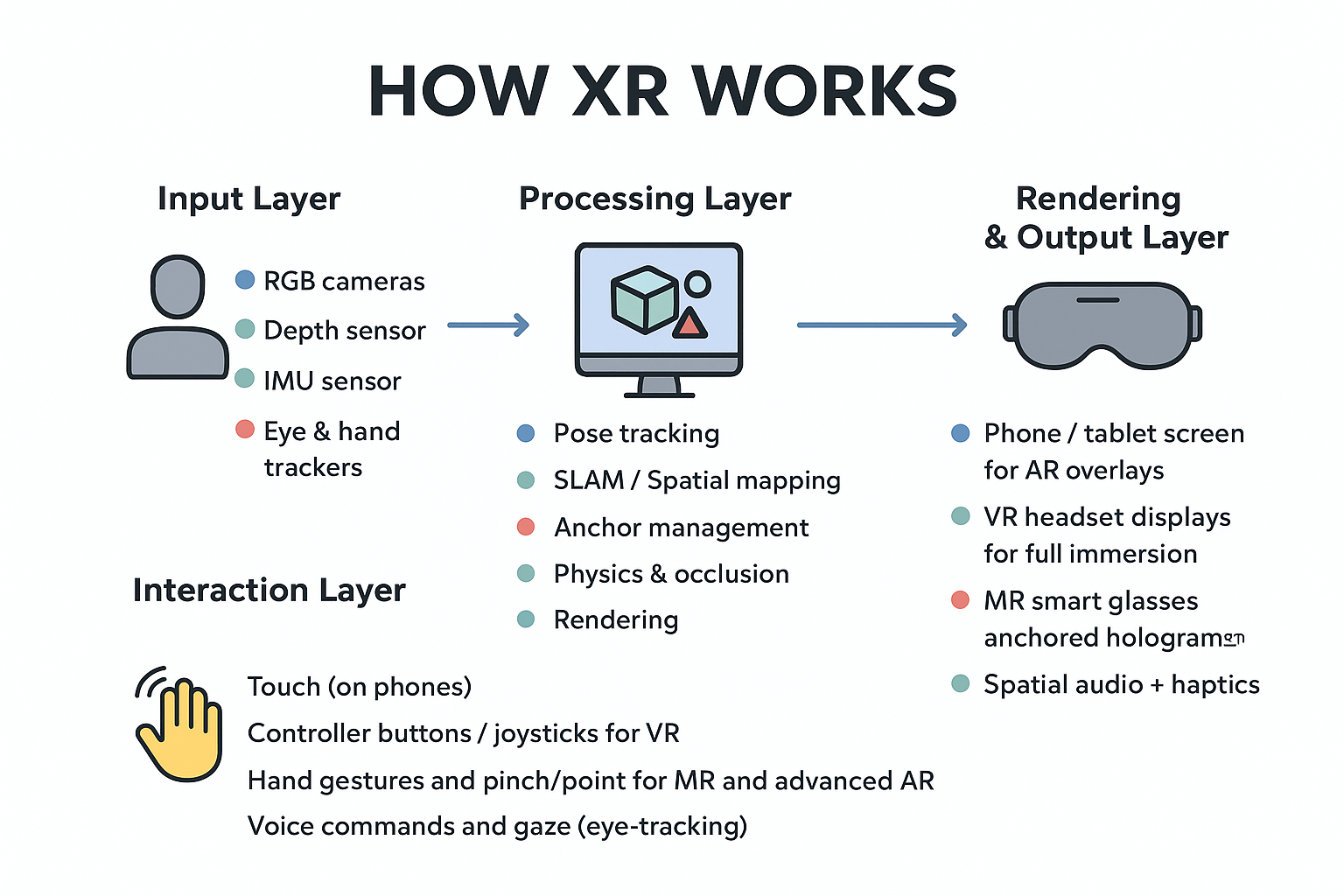
Spatial UX isn't just about what the user sees, but how they interact:- Gesture Input: Pinch, grab, push, or swipe in 3D space.
- Gaze Interaction: Ideal when hands aren't available.
- Controller-Based Input: Suitable for precision-heavy tasks.
// Example: Detecting a pinch gesture (pseudo XR script)
if(handGesture === "pinch") {
  triggerAction("selectObject");
}
🌠World-Locked vs Body-Locked UX
Spatial UX designers must decide whether interfaces should:- Follow the user (body-locked panels like HUDs)
- Stay fixed in the environment (world-anchored dashboards)
🌈 Spatial Aesthetics: Lighting, Depth & Scale
Spatial UX also deals with visual realism:- Use subtle shadows to indicate depth.
- Apply scale that matches the environment.
- Ensure consistent lighting cues so objects feel believable.
// Example: Adding spatial shadows to UI elements
uiElement.castShadow = true;
uiElement.receiveShadow = true;
scene.add(uiElement);
♿ Accessibility in Spatial UX
An inclusive XR environment considers:- Reduced motion modes for motion-sensitive users
- Voice-driven navigation
- High-contrast UI layers
- Optional 2D fallback panels
🧪 Prototyping Spatial UX Like a Pro
Popular tools for testing spatial interactions include:- Unity XR Interaction Toolkit
- Blender + XR Preview
- Adobe Aero
- Meta Presence Platform
// Example: XR UI anchor placement in Unity (C#)
var anchor = new GameObject("UIAnchor");
anchor.transform.position = Camera.main.transform.position + (Camera.main.transform.forward * 0.7f);
🚀 Final Thoughts
Spatial UX Design is the bridge between humans and immersive digital worlds. When done right, it removes friction, enhances natural behavior, and transforms how users interact with information. As AR and VR continue to evolve, mastering spatial UX will become an essential skill for designers and developers shaping the next generation of computing.If you’re passionate about building a successful blogging website, check out this helpful guide at Coding Tag – How to Start a Successful Blog. It offers practical steps and expert tips to kickstart your blogging journey!
For dedicated UPSC exam preparation, we highly recommend visiting www.iasmania.com. It offers well-structured resources, current affairs, and subject-wise notes tailored specifically for aspirants. Start your journey today!

Share:



Comments
Waiting for your comments