
XR Input Methods
0 1193
🎮 Understanding XR Input Methods
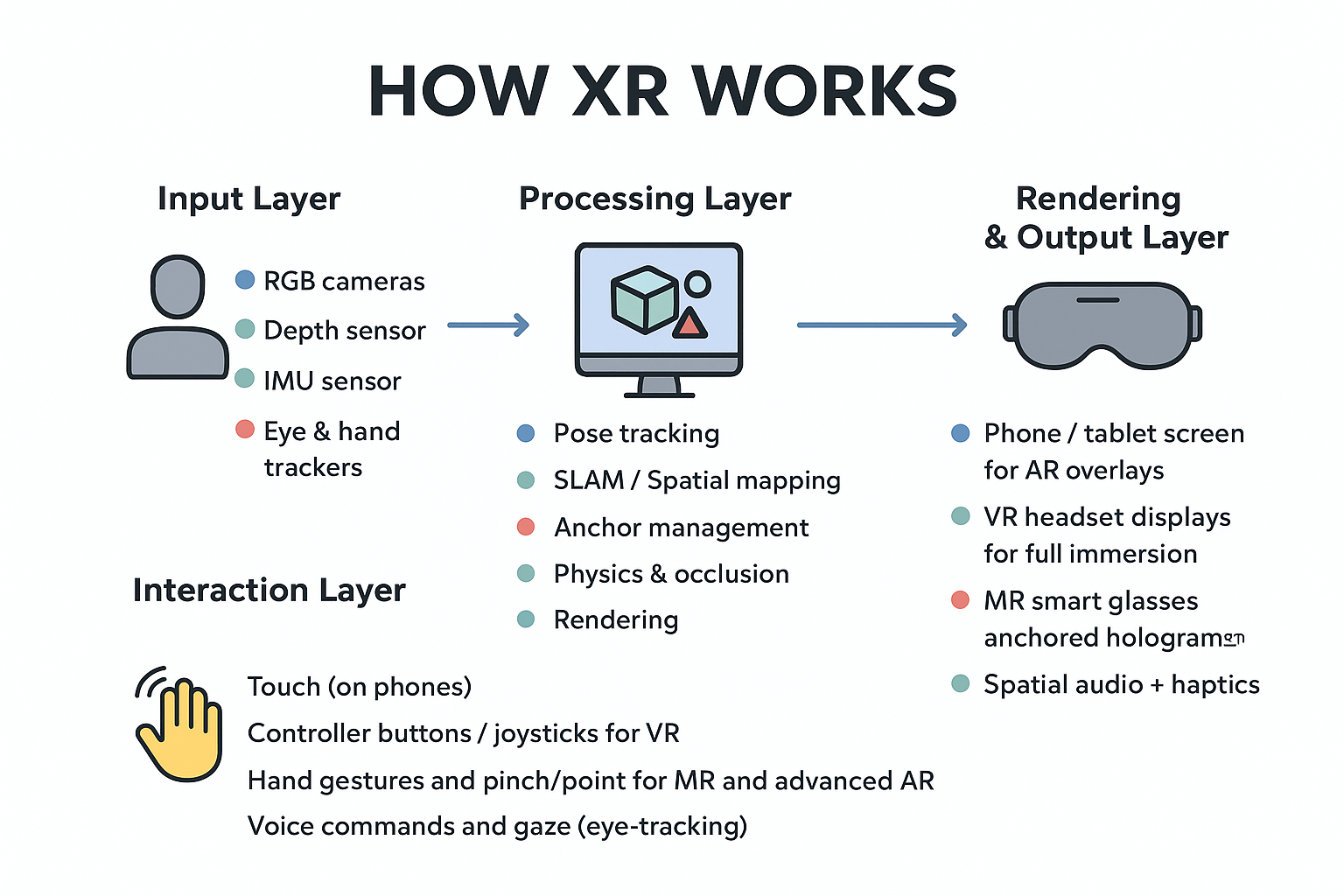
XR Input Methods define how users communicate with virtual, augmented, or mixed environments. From subtle hand movements to powerful voice commands, these methods shape how natural and intuitive a digital interaction feels. In today’s hybrid reality world, input isn’t just clicking a button—it's about blending physical and digital actions seamlessly.ðŸ–ï¸ Hand Tracking & Gesture Recognition
One of the most natural ways to interact with XR is using hands. Modern XR systems can detect individual finger movements, gesture patterns, and even pinch-based selections. This allows users to grab virtual objects, navigate menus, and manipulate controls without extra devices.🎤 Voice Interaction for Hands-Free Control
Voice commands make XR experiences accessible and fast. Whether it's saying “open menu,†“place object,†or “zoom in,†users can perform tasks instantly. This becomes especially useful when the user’s hands are busy performing other tasks.
if (voiceCommand === "open menu") {
    openXRMenu();
}
🎮 Traditional Controllers in XR
Even with advanced sensors, controllers continue to be a reliable input solution. They offer tactile feedback, physical buttons, and precise tracking. Many VR headsets still use controllers because they provide accuracy and ease for gaming or complex 3D tasks.
let controllerInput = xrController.getAxis(0);
console.log("Controller axis value:", controllerInput);
👀 Eye-Tracking for Seamless Targeting
Eye-tracking enables the system to detect what the user is looking at. Combined with other inputs, this offers “gaze + action†interactions—for example, look at a button and tap fingers to select it. This makes XR feel faster, lighter, and more like natural human behavior.🔊 Haptic Feedback Enhancing Realism
Haptics simulate touch sensations in virtual space. A simple vibration can mimic pressing a virtual button, picking up a glowing cube, or experiencing tension in a bowstring. Haptic gloves and suits are emerging for deeper multisensory immersion.📠Spatial & Motion-Based Inputs
Spatial inputs use sensors and cameras to track body movement, head rotation, environment geometry, and object positions. This makes XR interactions dynamic—walk around, lean forward, crouch, or move your hands in space to influence virtual experiences.🧩 Combining Multiple Input Systems
Modern XR platforms often mix several input methods: hand tracking + voice + controllers + eye tracking. This hybrid approach enables users to perform tasks in whichever way feels most natural to them, increasing comfort and reducing effort during long sessions.🚀 Final Thoughts on XR Input Methods
XR Input Methods are evolving rapidly, pushing experiences closer to real-world natural interaction. As technology advances, we’ll move toward interfaces that feel invisible—where our body, voice, and attention become the only tools we need to navigate immersive realities.If you’re passionate about building a successful blogging website, check out this helpful guide at Coding Tag – How to Start a Successful Blog. It offers practical steps and expert tips to kickstart your blogging journey!
For dedicated UPSC exam preparation, we highly recommend visiting www.iasmania.com. It offers well-structured resources, current affairs, and subject-wise notes tailored specifically for aspirants. Start your journey today!

Share:



Comments
Waiting for your comments