
What is VR?
0 943
🎮 Introduction: What is VR?
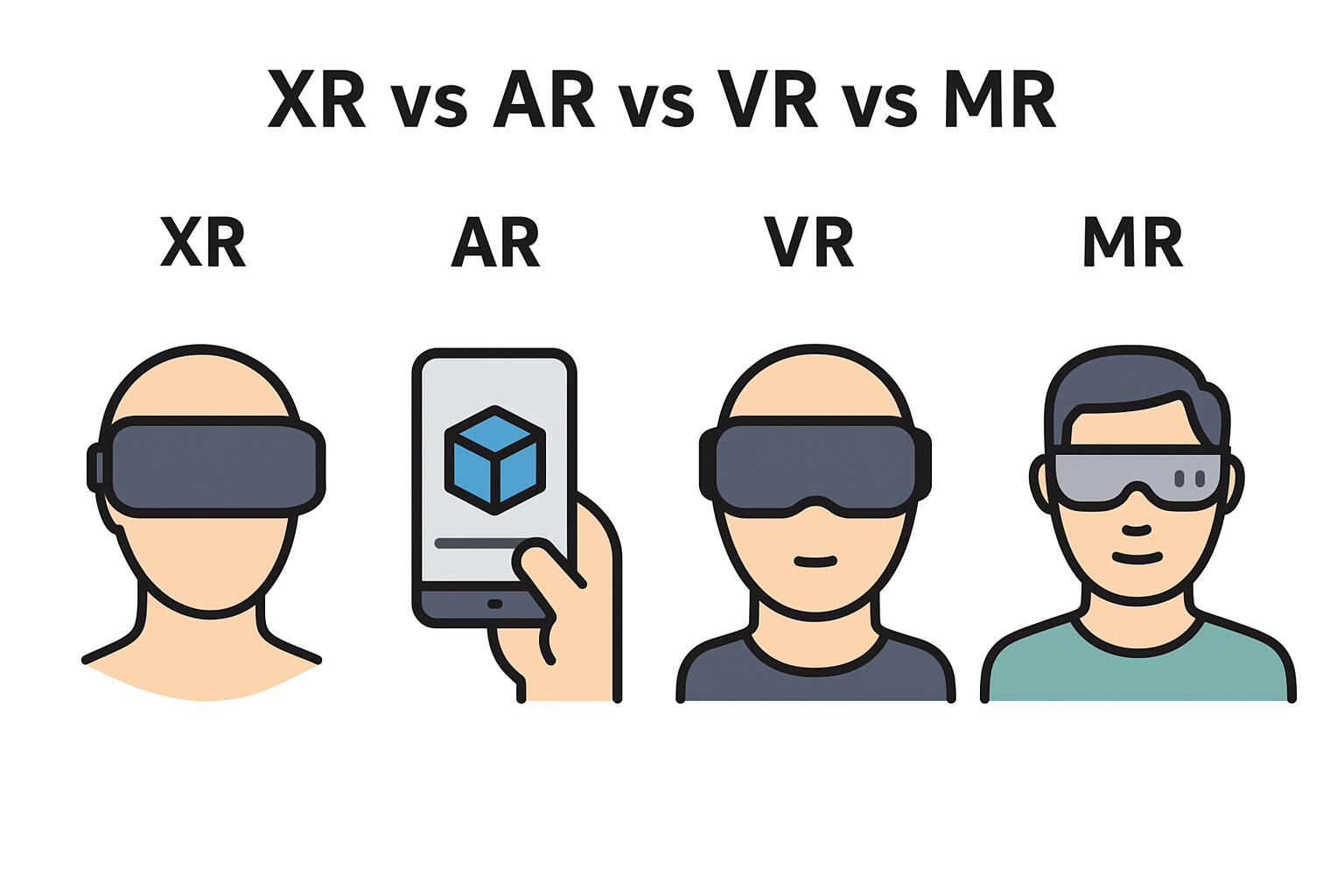
Virtual Reality (VR) is a technology that lets you step inside a fully digital world where everything around you is computer-generated. With the help of a VR headset, motion tracking, and immersive visuals, users feel as if they are physically present inside a different environment — whether it’s a sci-fi planet, a classroom, or a high-intensity training simulation.🌠How VR Works Behind the Scenes
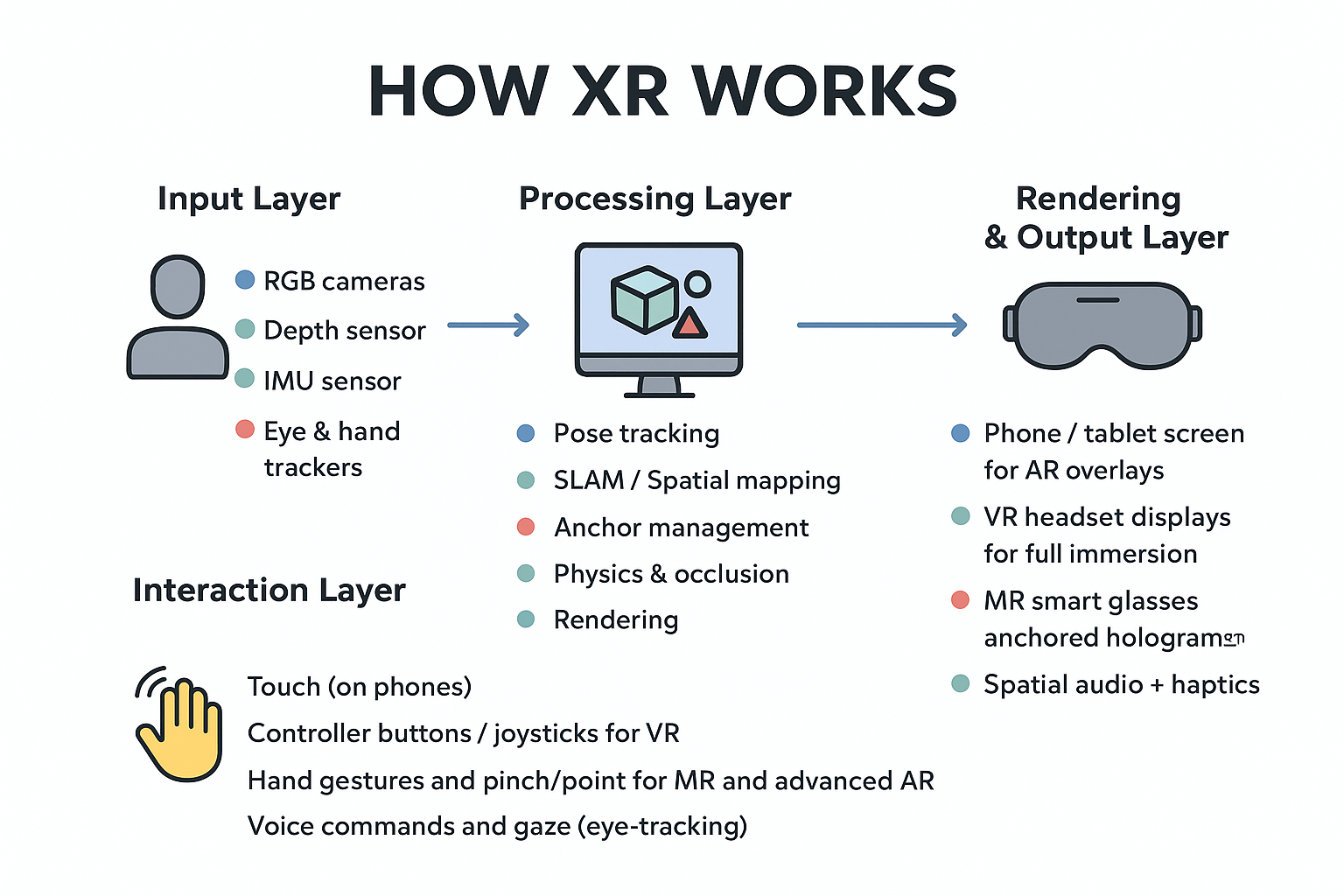
VR creates believable environments using 3D graphics, spatial sound, movement tracking, and real-time rendering. The headset displays separate images to each eye, creating depth and realism. Combined with gyroscopes and sensors, every head movement updates the virtual scene instantly.🧠Core Components of a VR System
- VR Headset: Displays the virtual world using stereoscopic screens.
- Motion Tracking: Detects user movements in real time.
- Controllers: Allow interaction with virtual objects.
- Software: Generates 3D scenes and handles physics.
💻 Simple Example: VR Scene Setup in WebXR
Here is a basic starter code for creating a simple VR-enabled webpage:
// Basic WebXR VR Setup (JavaScript)
if (navigator.xr) {
    navigator.xr.requestSession("immersive-vr").then(session => {
        console.log("VR Session Started!");
        // Initialize your 3D scene here
    });
} else {
    console.log("WebXR not supported on this device.");
}
ðŸ•¹ï¸ What Can You Do in VR?
VR is used in many fields beyond gaming. It is transforming industries by offering realistic simulations and immersive experiences that were previously impossible.- Gaming: Fully interactive and immersive adventures.
- Education: Virtual labs, experiments, and interactive classrooms.
- Healthcare: Surgery training, phobia treatment, rehabilitation.
- Military & Safety: Controlled training simulations.
- Architecture: Walkthroughs of buildings before they're built.
🧩 VR Interaction Example Using Three.js
Below is a small example showing how an object can be interacted with in VR:
// Rotate an object inside VR using controller input
controller.addEventListener("selectstart", () => {
    cube.rotation.x += 0.2;
    cube.rotation.y += 0.2;
    console.log("Cube rotated!");
});
⚡ Benefits of VR in Today’s World
- Provides safe environments for dangerous training.
- Creates highly engaging learning experiences.
- Boosts creativity and design visualization.
- Improves accessibility for remote work and collaboration.
â³ Limitations of VR
- Some users experience motion sickness.
- High-quality VR devices can be expensive.
- Requires powerful hardware for smooth performance.
- Physical space is needed for safe movement.
🚀 The Future of VR
As VR hardware becomes lighter, faster, and more affordable, the technology will integrate into everyday life. Future VR systems may use ultra-thin wearable glasses, AI-driven virtual worlds, and next-generation haptics that let you feel digital objects.✨ Conclusion
So, What is VR? It is a powerful immersive technology that lets users enter entirely new digital realities. As industries adopt VR for training, entertainment, education, and innovation, its influence will continue to grow — redefining how we interact with the digital world.If you’re passionate about building a successful blogging website, check out this helpful guide at Coding Tag – How to Start a Successful Blog. It offers practical steps and expert tips to kickstart your blogging journey!
For dedicated UPSC exam preparation, we highly recommend visiting www.iasmania.com. It offers well-structured resources, current affairs, and subject-wise notes tailored specifically for aspirants. Start your journey today!

Share:


Comments
Waiting for your comments