
XR Display Types
0 1088
ðŸ–¥ï¸ Introduction to XR Display Types
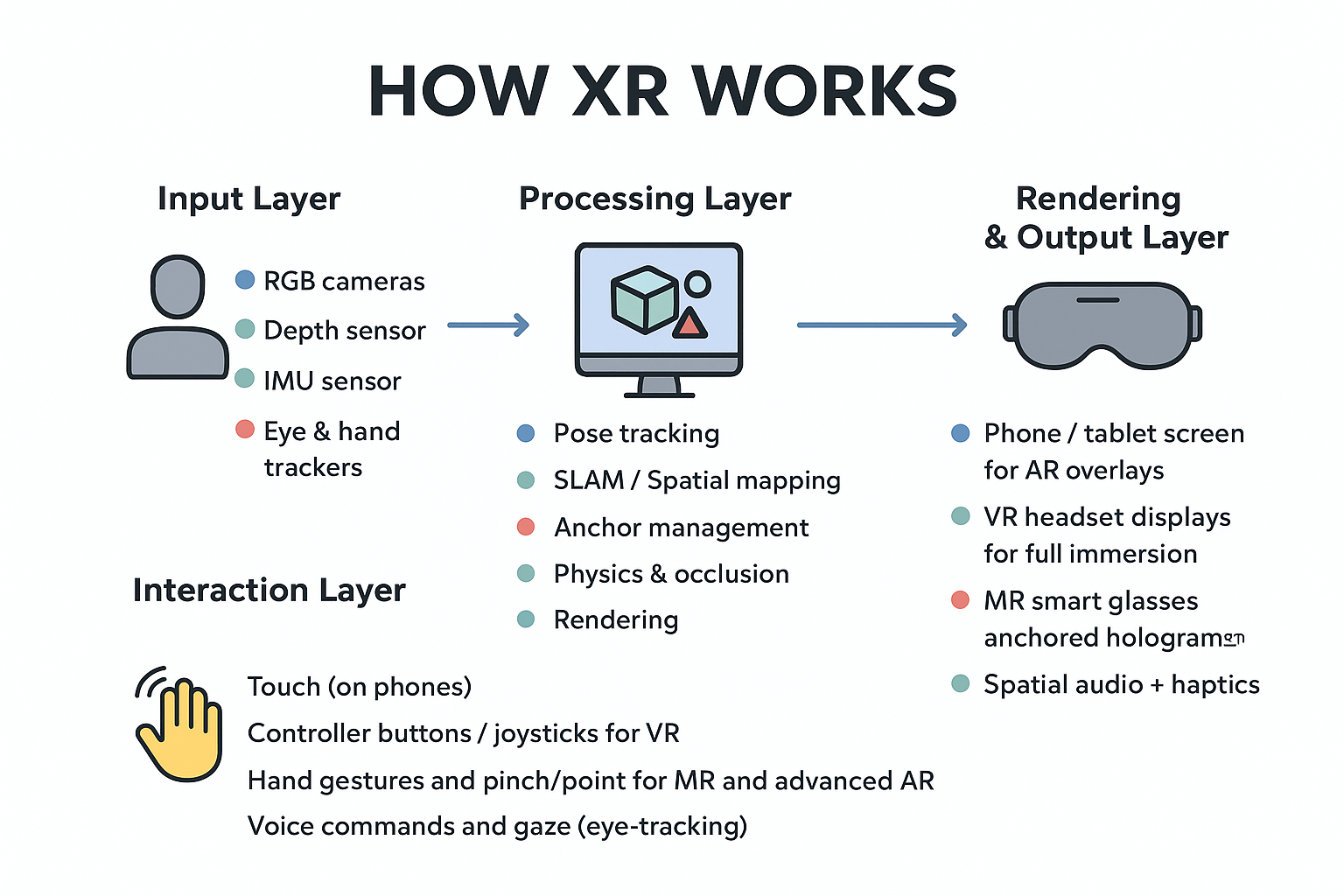
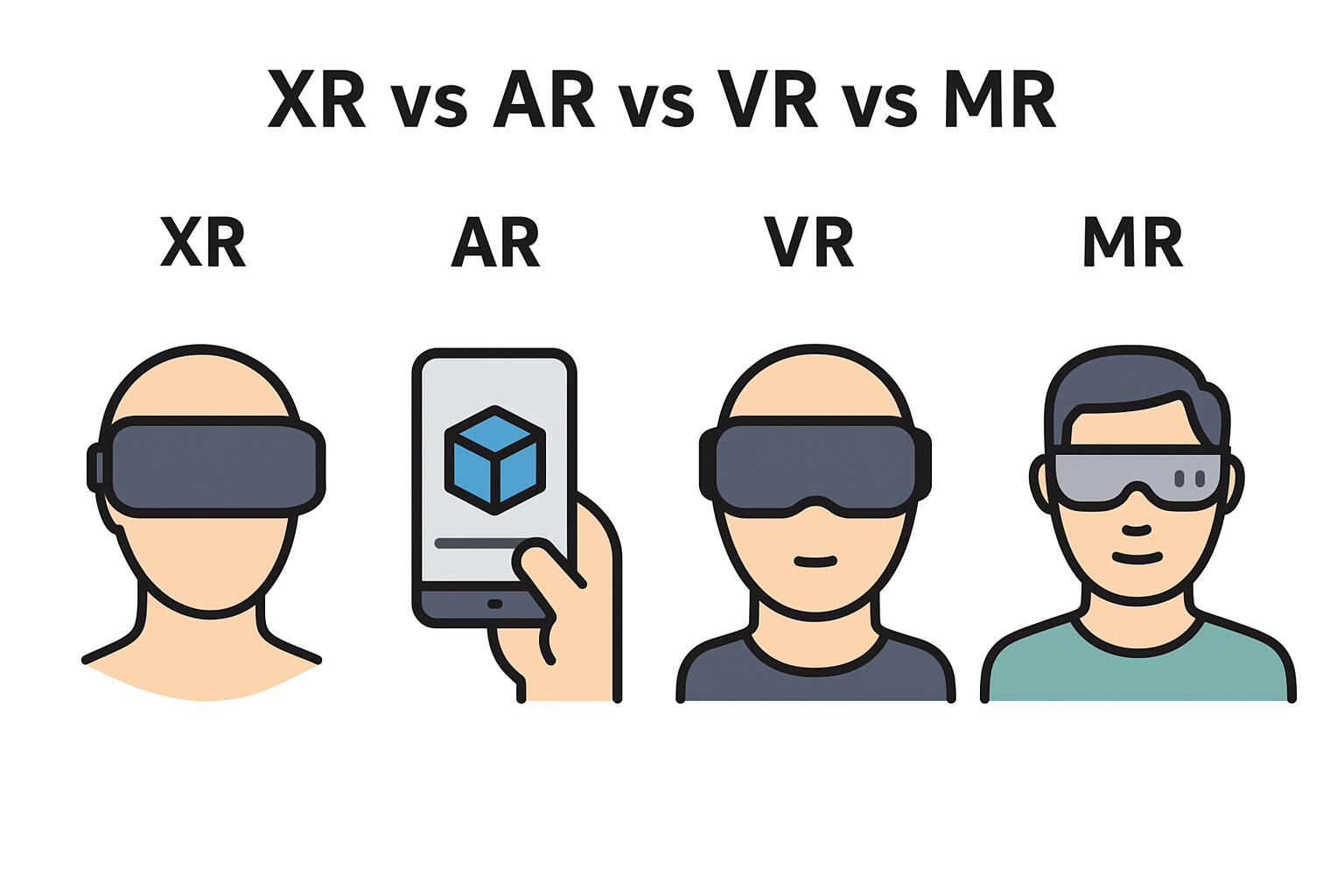
XR Display Types define how virtual, augmented, and mixed reality visuals come to life. Every display technology affects clarity, brightness, latency, color accuracy, and the overall immersive feel. Whether you're entering a fully virtual world or layering holograms on reality, the display is the heart of the experience.🔠VR Displays: LCD, OLED & Micro-OLED
Virtual Reality headsets rely on high-resolution panels to create deep immersion. LCD screens are bright and affordable, OLED offers rich contrast and true blacks, while Micro-OLED pushes visual clarity to new heights with ultra-dense pixel layouts.
function selectVRDisplay(type) {
    switch(type) {
        case "LCD": return "High brightness, budget friendly";
        case "OLED": return "Deep blacks, vivid colors";
        case "Micro-OLED": return "Ultra clarity, premium class";
        default: return "Unknown display type";
    }
}
🌈 AR Displays: Waveguides & Light Engines
AR headsets project digital layers onto the real world using waveguide optics. These displays bend and guide light into the user’s eyes, allowing holograms to appear floating in space. The better the waveguide, the sharper and more stable the AR visuals.
const ARDisplay = {
    type: "Waveguide",
    fov: 50,
    brightness: "High"
};
console.log(ARDisplay);
🔮 Mixed Reality Displays & Passthrough
Mixed Reality devices blend high-quality cameras with advanced displays to merge real and virtual elements. Passthrough-based MR uses external cameras to reconstruct the world inside the headset, allowing accurate depth, lighting, and spatial blending.✨ Light Field & Holographic Displays
Light field and holographic displays aim to present visuals with natural depth—no eye strain, no fixed focus point. These futuristic systems simulate how light behaves in real environments, providing genuine 3D without traditional stereoscopic limitations.🔠Pancake Lenses & Visual Sharpness
Many modern XR devices use pancake lenses to reduce headset size while improving clarity. They bounce light multiple times within compact layers, allowing slimmer designs without compromising image quality.📠Field of View, Latency & Resolution Factors
Choosing the right XR Display Type involves balancing field of view, refresh rate, latency, and resolution. A wider FOV boosts immersion, while lower latency makes interactions feel responsive and natural.🚀 Final Thoughts on XR Display Types
XR Display Types continue to evolve rapidly. From Micro-OLED clarity to waveguide AR and holographic innovations, each technology pushes immersive computing forward. As displays become lighter, sharper, and more natural, the line between digital and physical worlds will blur even further.If you’re passionate about building a successful blogging website, check out this helpful guide at Coding Tag – How to Start a Successful Blog. It offers practical steps and expert tips to kickstart your blogging journey!
For dedicated UPSC exam preparation, we highly recommend visiting www.iasmania.com. It offers well-structured resources, current affairs, and subject-wise notes tailored specifically for aspirants. Start your journey today!

Share:



Comments
Waiting for your comments