
Spatial Anchors
0 966
📌 Introduction to Spatial Anchors
Spatial Anchors are like invisible pins that allow digital objects in AR to stay locked in a real-world spot—even if you close the app, reopen it, or view it from another device. These anchors form the backbone of stable, persistent, and shared AR experiences. From navigation tools to multi-user games, Spatial Anchors help AR applications blend virtual and physical layers seamlessly. Let’s explore them in a more creative and simplified way so they feel intuitive and developer-friendly.🧠Why Spatial Anchors Matter in AR?
When a virtual chair stays perfectly on your floor or a digital sign remains at a store entrance even after you revisit it—Spatial Anchors are doing the magic. They bridge the gap between momentary AR effects and long-lasting, real-world–aligned interactions.- They make AR experiences persistent.
- They allow multi-user collaboration in the same environment.
- They create location-based interactions that feel natural.
- They support high-precision object placement.
🔧 How Spatial Anchors Work (Simplified)
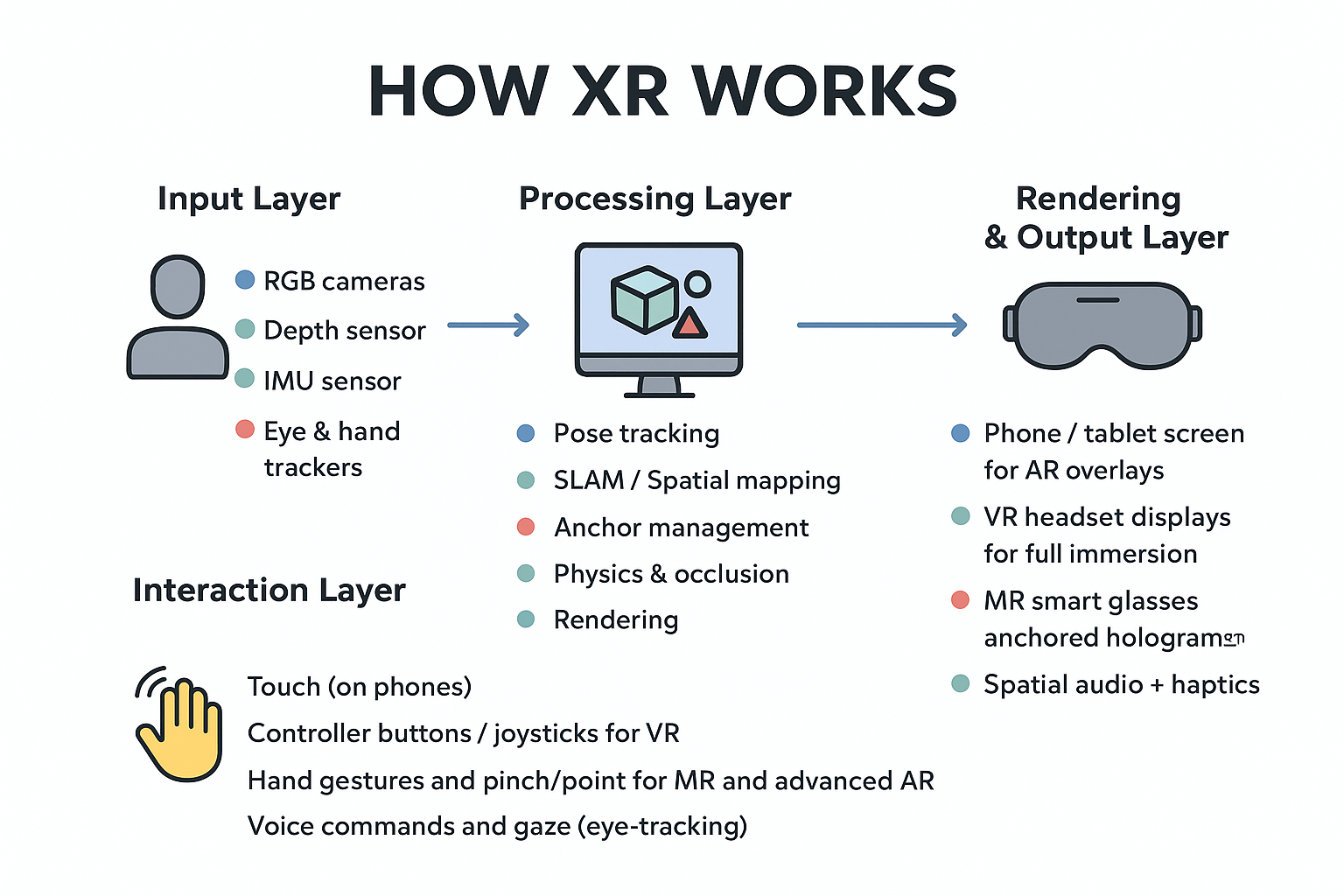
Spatial Anchors use device cameras and sensors to map the environment. This mapping process creates a 3D understanding of an area. Once an anchor is placed, the system remembers key visual points and relates digital objects to them. When the user returns, the system re-identifies the same real-world features and repositions the virtual objects accurately.📱 Example: Creating an Anchor with ARCore
Here’s a clean and simple example using ARCore to create spatial anchors in Android:
// Creating an ARCore anchor
HitResult hitResult = ...; // From a tap or raycast
Anchor anchor = hitResult.createAnchor();

// Attaching a virtual object to the anchor
AnchorNode anchorNode = new AnchorNode(anchor);
anchorNode.setParent(arSceneView.getScene());
RenderableInstance instance = new RenderableInstance(myModel);
anchorNode.setRenderable(myModel);
ðŸ Example: Creating an Anchor with ARKit (Swift)
Below is an iOS ARKit example of placing a spatial anchor:
// Creating an ARKit anchor
let anchor = ARAnchor(transform: matrix_identity_float4x4)
sceneView.session.add(anchor: anchor)

// Adding a 3D object linked to the anchor
func renderer(_ renderer: SCNSceneRenderer, didAdd node: SCNNode, for anchor: ARAnchor) {
    let box = SCNBox(width: 0.1, height: 0.1, length: 0.1, chamferRadius: 0)
    let boxNode = SCNNode(geometry: box)
    node.addChildNode(boxNode)
}
🤠Shared AR Experiences with Cloud Anchors
Cloud anchors allow multiple users to see the same AR object in the same place—even on different devices or platforms. These anchors are uploaded and synced through a cloud service, making collaborative experiences feel truly magical. Use cases include:- AR treasure hunts
- Shared designing and prototyping
- Team navigation systems
- Interactive classroom learning
🚀 Real-World Uses of Spatial Anchors
Spatial Anchors power a variety of industry-grade applications:- Retail: Virtual product preview fixed at store aisles
- Education: Persistent AR models in classrooms
- Construction: Aligning 3D models over actual structures
- Healthcare: Training with precise AR overlays
- Navigation: AR wayfinding inside malls, airports, and hospitals
💡 Best Practices for Stable Spatial Anchors
To ensure anchors stay stable and reliable:- Place anchors in areas with strong visual features.
- Avoid reflective or plain surfaces.
- Use good lighting for better mapping.
- Limit unnecessary movement when placing anchors.
- Use cloud anchors for cross-device persistence.
ðŸ Conclusion
Spatial Anchors are a transformative part of modern AR development. They let apps remember where virtual objects belong, help multiple users interact with the same AR world, and enable rich mixed-reality experiences that feel grounded in the real world. As AR continues to evolve, Spatial Anchors will become even more precise and powerful, allowing creativity and technology to merge in ways we can only imagine today.If you’re passionate about building a successful blogging website, check out this helpful guide at Coding Tag – How to Start a Successful Blog. It offers practical steps and expert tips to kickstart your blogging journey!
For dedicated UPSC exam preparation, we highly recommend visiting www.iasmania.com. It offers well-structured resources, current affairs, and subject-wise notes tailored specifically for aspirants. Start your journey today!

Share:



Comments
Waiting for your comments