
Tracking XR Engagement
0 1057
📊 Understanding Tracking XR Engagement
Tracking XR Engagement is far more than just counting how long users stay inside a virtual or augmented environment. It is about understanding what they do, how they move, what they interact with, and why they behave a certain way. Well-structured engagement tracking transforms raw interaction data into actionable UX insights.🎯 Why Tracking XR Engagement Matters
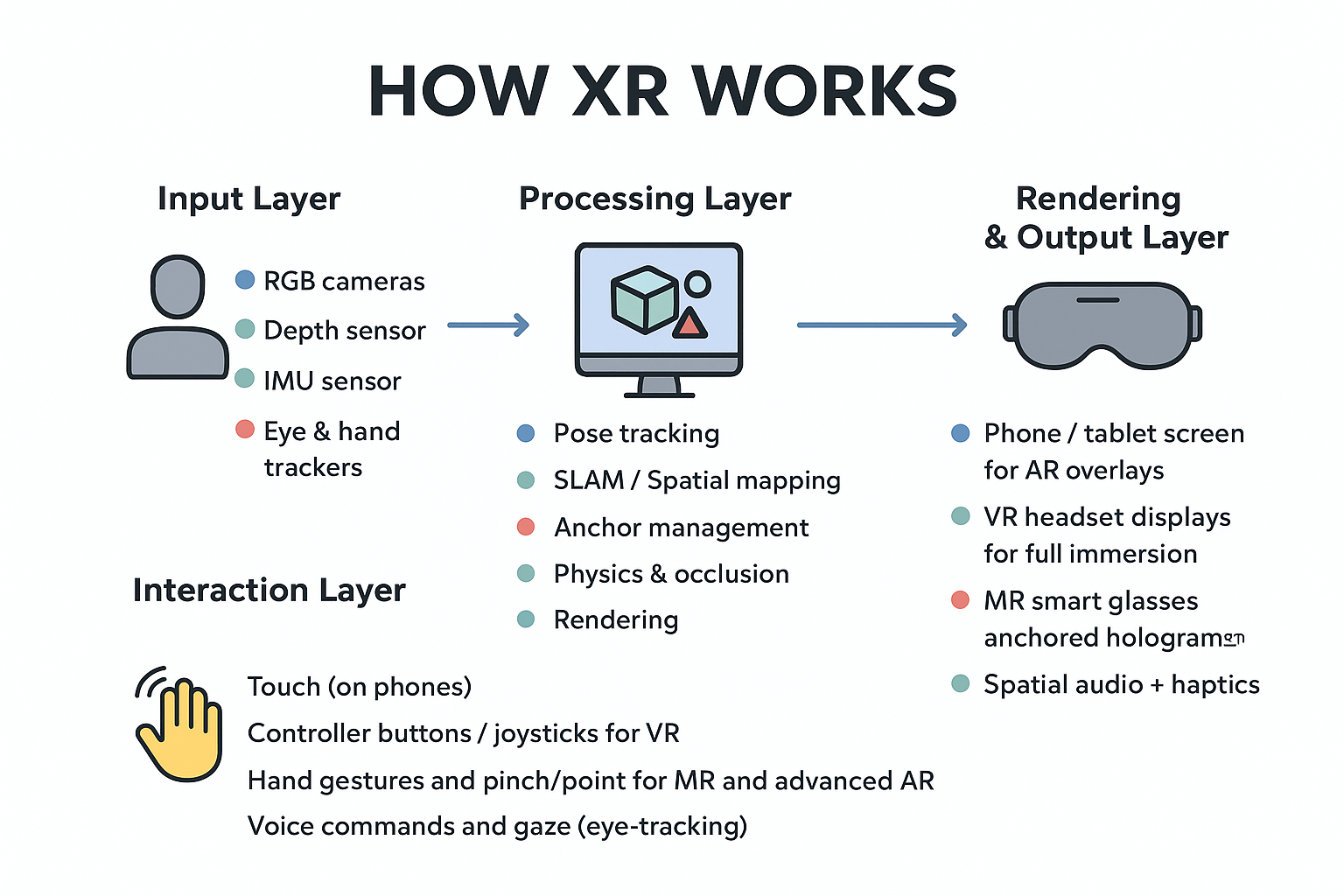
In immersive spaces, users engage with environments in a deeply spatial and behavioral way. Unlike traditional screens, XR systems must track body movement, gaze, gestures, hand interactions, voice commands and more. This helps designers pinpoint friction zones, understand drop-off patterns, and identify high-value interactions. Strong engagement tracking ensures smoother experiences and reduces user fatigue or confusion.🧠Core Metrics for XR Engagement
Here are the primary dimensions used to measure user engagement in XR environments:- Interaction Heatmaps: Shows where users touch, grab, look, or gesture.
- Gaze Duration & Fixation: Indicates interest or confusion points.
- Movement Patterns: Tracks how users navigate spatial environments.
- Task Completion Times: Helps identify cognitive load or inefficiency.
- Error Frequency: Reveals usability issues or unclear UI cues.
- Retention & Return Rate: A sign of long-term engagement.
ðŸ—ºï¸ Example: Simple Interaction Logging in Unity (C#)
Below is a minimal example of how developers can log basic user interactions inside XR environments.
// Basic XR Interaction Logger
using UnityEngine;

public class XRInteractionLogger : MonoBehaviour
{
    void OnTriggerEnter(Collider other)
    {
        Debug.Log("User interacted with: " + gameObject.name +
                  " at " + Time.time + " seconds");
    }
}
ðŸ‘ï¸ Adding Gaze Tracking for Engagement Insight
Gaze signals reveal user attention flow. Below is a conceptual example using Unity XR Input APIs:
// Simple Gaze Capture Example
using UnityEngine;
using UnityEngine.XR;

public class XRGazeTracker : MonoBehaviour
{
    public Transform cameraTransform;

    void Update()
    {
        Ray gaze = new Ray(cameraTransform.position, cameraTransform.forward);
        Debug.DrawRay(gaze.origin, gaze.direction * 10f, Color.green);
    }
}
🔠Heatmaps: The Heart of XR Engagement Analysis
Heatmaps visually represent high-interaction areas inside virtual scenes. They reveal:- Which objects attract attention
- Where users struggle
- What interactions feel natural or intuitive
- How much physical space users comfortably move in
🤖 Using AI to Enhance XR Engagement Tracking
AI-assisted XR analytics can automatically classify:- User sentiment through movement fluidity
- Interaction hesitations (latency between intent & action)
- Behavior anomalies or discomfort signals
- Interest points based on repeat engagement
🔧 Common Mistakes in Measuring XR Engagement
- Tracking too many metrics → leads to noise
- Ignoring physical comfort and fatigue signs
- Forgetting accessibility-driven interaction differences
- Focusing only on task completion instead of emotional flow
📌 Best Practices for High-Quality Engagement Tracking
- Track multimodal interactions like gaze, gesture, voice, and controller use.
- Design for natural movement to avoid user frustration.
- Use progressive onboarding to reduce confusion.
- Correlate engagement with comfort to minimize fatigue.
- Visualize everything — heatmaps, flow maps, funnels.
🧩 Practical Use Case: Engagement Funnel in XR
A simple VR onboarding funnel example:- User enters scene
- Looks at primary UI panel
- Selects an item via gesture
- Completes interaction task
- Returns or exits
✨ Final Thoughts
Tracking XR Engagement is essential for developing intuitive, comfortable, and emotionally resonant immersive experiences. By combining metrics like gaze, interaction, movement, and task efficiency, designers gain a powerful view of how users actually behave inside XR. When executed well, engagement tracking becomes the foundation of a smarter, more user-centric XR design process.If you’re passionate about building a successful blogging website, check out this helpful guide at Coding Tag – How to Start a Successful Blog. It offers practical steps and expert tips to kickstart your blogging journey!
For dedicated UPSC exam preparation, we highly recommend visiting www.iasmania.com. It offers well-structured resources, current affairs, and subject-wise notes tailored specifically for aspirants. Start your journey today!

Share:



Comments
Waiting for your comments