
VR for Gaming
0 888
🎮 VR for Gaming: A New Era of Immersive Play
Virtual Reality has redefined how we experience digital worlds. Once considered futuristic, VR for Gaming is now a mainstream revolution where players step directly into the adventure, interact with dynamic environments, and enjoy a level of immersion traditional screens cannot offer.ðŸ•¶ï¸ What Makes VR Gaming So Unique?
VR gaming transports players into fully interactive 3D environments. Instead of controlling a character from a distance, you *become* the character. The combination of motion tracking, 6DoF movement, and real-time environment feedback enhances realism and creates unforgettable experiences.âš™ï¸ Core Components Behind the Magic of VR
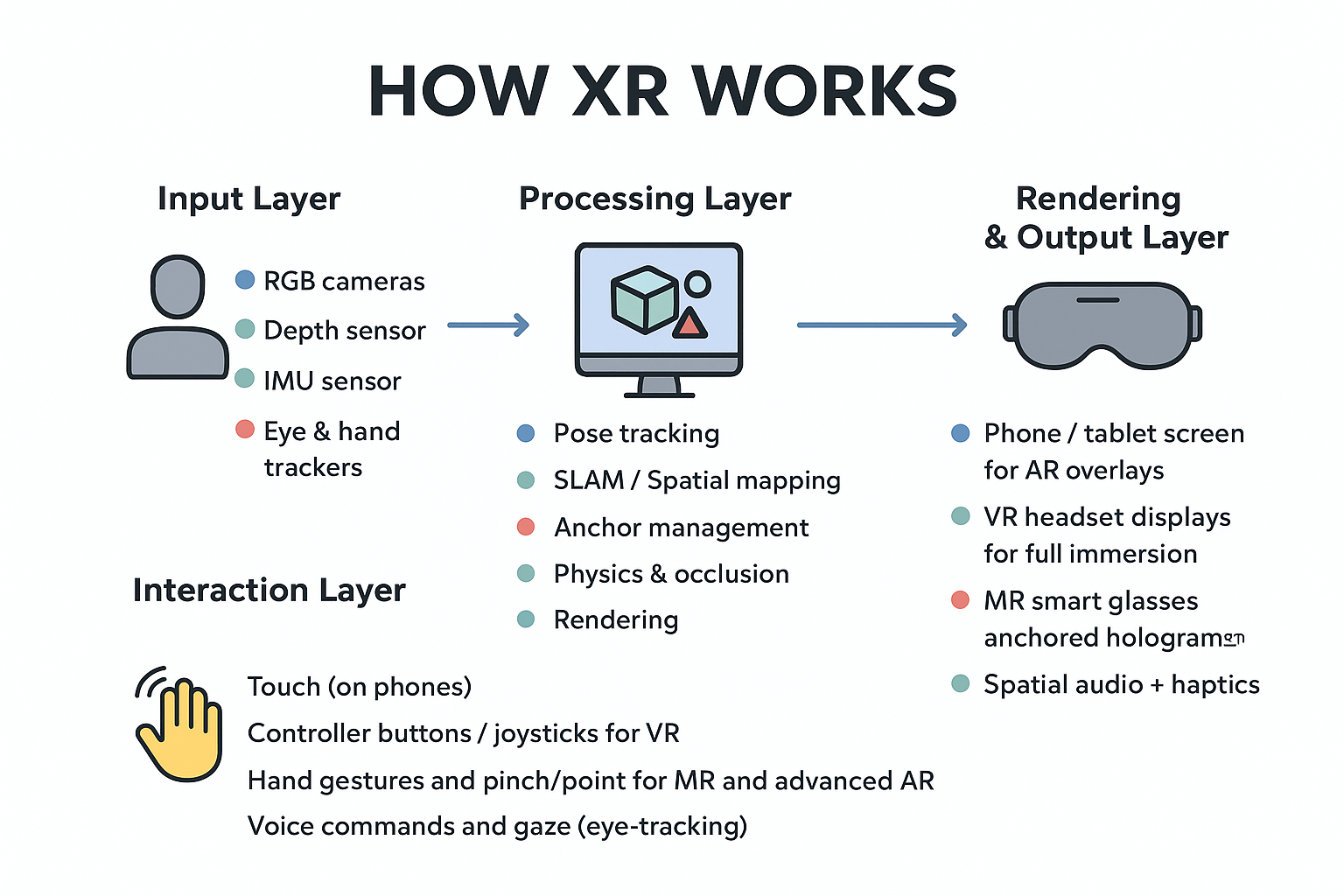
VR systems depend on key hardware and software working together seamlessly:- Head-Mounted Displays (HMDs) – Provide stereoscopic visuals and depth perception.
- Controllers – Enable gestures, grabbing, shooting, and interacting with objects.
- Base Stations / Sensors – Track body and hand movement precisely.
- VR-Optimized Engines like Unity or Unreal for rendering dynamic 3D worlds.
💡 Sample VR Interaction Code (Unity C#)
Here’s a simplified interaction script developers often use to pick up objects in VR:
// Simple VR object pickup script in Unity C#
using UnityEngine;

public class VRPickup : MonoBehaviour
{
    public Transform hand;

    void OnTriggerStay(Collider other)
    {
        if(other.CompareTag("VRObject") && Input.GetButtonDown("Fire1"))
        {
            other.transform.SetParent(hand);
            other.GetComponent().isKinematic = true;
        }
    }

    void Update()
    {
        if(Input.GetButtonUp("Fire1"))
        {
            foreach(Transform child in hand)
            {
                child.SetParent(null);
                child.GetComponent().isKinematic = false;
            }
        }
    }
}
🚀 Real-World Applications in VR Gaming
From survival missions to rhythm games, VR has created entirely new genres:- Fitness-based VR games like Beat Saber burn calories while having fun.
- Open-world explorations allow players to traverse massive landscapes.
- Multiplayer VR arenas foster teamwork and competitive matches.
🔧 Developing VR Games: Best Practices
Successful VR games follow key design principles:- Optimize environments to prevent lag and motion sickness.
- Create intuitive gesture-based controls.
- Maintain stable frame rates (minimum 72–90 FPS).
- Use spatial audio to enhance immersion.
🌠Future of VR in the Gaming Industry
The future holds groundbreaking potential—wireless HMDs, AI-driven VR characters, full-body tracking, and photorealistic game worlds. As VR continues to blend digital and physical realities, it will redefine how people play, compete, and even socialize.ðŸ Final Thoughts
VR for Gaming is no longer a niche experiment; it’s a transformative force shaping the next generation of entertainment. With advancements in tracking, visuals, and hardware efficiency, the gaming world is gearing up for its most immersive chapter yet.If you’re passionate about building a successful blogging website, check out this helpful guide at Coding Tag – How to Start a Successful Blog. It offers practical steps and expert tips to kickstart your blogging journey!
For dedicated UPSC exam preparation, we highly recommend visiting www.iasmania.com. It offers well-structured resources, current affairs, and subject-wise notes tailored specifically for aspirants. Start your journey today!

Share:



Comments
Waiting for your comments