
XR UI Best Practices
0 1190
🎯 What Are XR UI Best Practices?
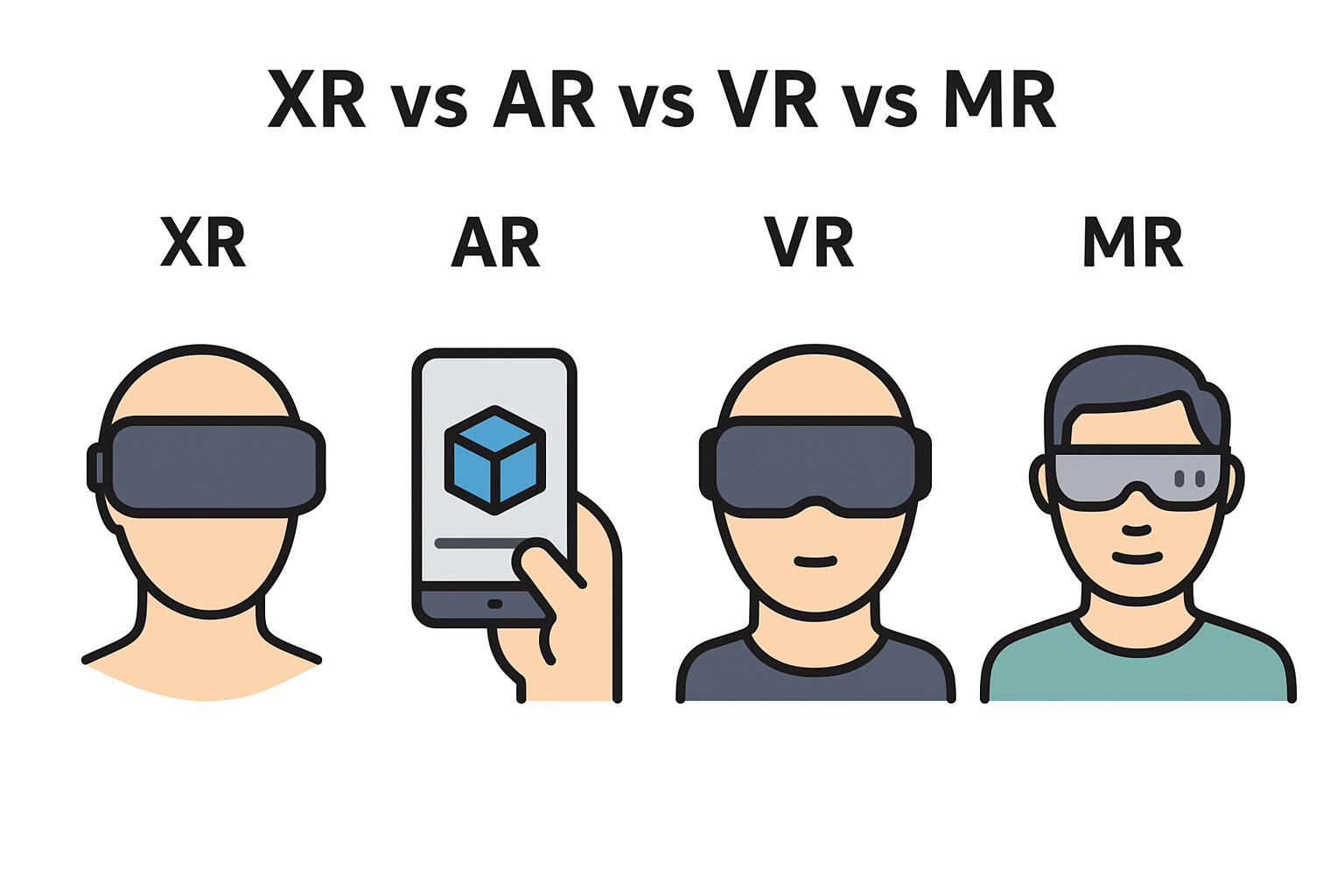
XR UI Best Practices are the design principles, interaction rules, and spatial layout strategies that ensure VR, AR, and MR interfaces feel natural, usable, and comfortable. Unlike flat screens, XR demands volumetric thinking — elements live in 3D space, react to depth, and adapt to user movement. A well-designed XR UI reduces confusion, prevents motion discomfort, and improves the overall immersive experience.ðŸ‘ï¸ Designing for Depth & Spatial Awareness
Spatial UI works best when depth is used purposefully. Good XR UI gives the user strong depth cues and ensures every panel or button exists in a logical 3D hierarchy. Follow these guidelines:- Maintain ideal UI distance: 0.5m–1.5m from the user.
- Use subtle shadows & parallax: Helps the brain interpret depth correctly.
- Provide a stable anchor: UI should not float unpredictably when the user moves.
👠Gesture, Gaze & Controller Inputs
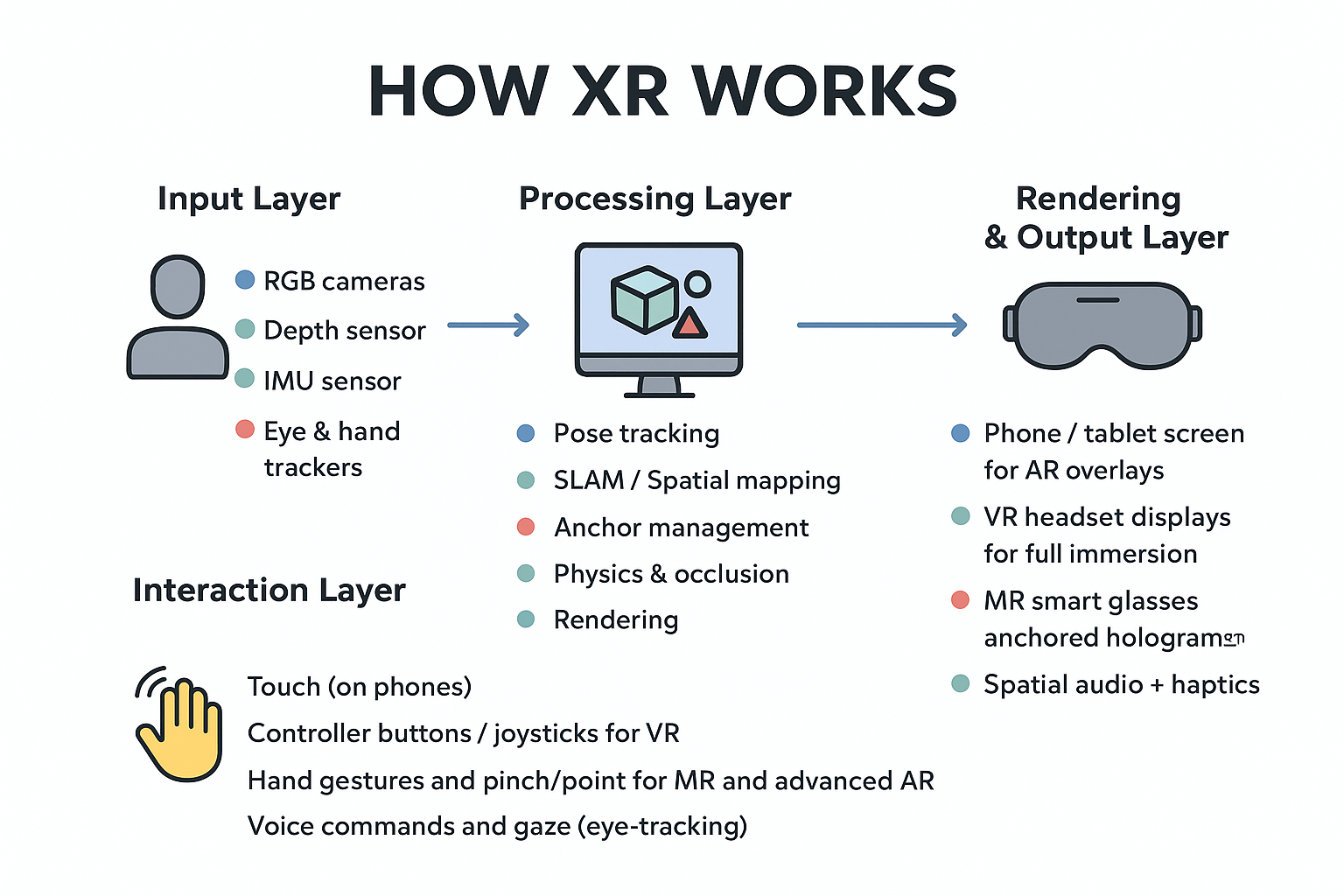
Interactions vary by device, so a flexible input system is essential. Ensure:- Gesture-friendly buttons: Large enough for pinch or poke gestures.
- Gaze fallback: Useful for accessibility and hands-free interaction.
- Controller precision: Laser-pointer selections must be smooth and responsive.
📠Layout Principles for Spatial UI
XR UI layouts must accommodate the natural movement of the head, hands, and body. Core rules include:- Don’t overload the field of view: Leave breathing room around interfaces.
- Use curved surfaces: Wrap content slightly around the user for easier reading.
- Avoid floating clutter: Keep UI simple, purposeful, and context-based.
🧩 Example: Unity World-Space XR UI Panel
A compact Unity example showing how to create a world-space canvas that faces the player automatically.
// Create a world-space UI panel that always faces the camera

using UnityEngine;

public class FaceUserUI : MonoBehaviour
{
    public Transform cameraTarget;

    void Update()
    {
        if (!cameraTarget) return;

        // Rotate to face the user
        transform.LookAt(cameraTarget);
        transform.rotation = Quaternion.Euler(0,
                                              transform.rotation.eulerAngles.y + 180,
                                              0);
    }
}
🎨 Visual Hierarchy & Readability in XR
To make text and icons readable inside immersive spaces:- Use large typography: Minimum readable size in XR is bigger than 2D screens.
- High contrast UI: Prevents readability issues in bright AR environments.
- Color-coding: Helps users process information faster.
♿ Accessibility Principles in XR UI
Not every user interacts the same way. Support:- Voice input as a fallback
- Multiple control methods (gesture, gaze, controller)
- Adjustable text size, panel distance, and brightness
- Clear audio cues for low-vision users
âš ï¸ Common XR UI Mistakes to Avoid
Designers often create discomfort without realizing it. Avoid:- Overcrowded menus placed too close to the user
- UI locked to head movement (leads to fatigue)
- Tiny buttons that are hard to select
- Ignoring lighting — dark UIs become unreadable
🧪 Testing & Iterating on XR UI
XR UI must be validated in real-world conditions:- Test across different lighting conditions
- Evaluate physical comfort in long sessions
- Check if interactions work for left and right-handed users
- Measure time-to-select and error rates
🚀 Future of XR UI Design
As eye-tracking, hand-tracking, and spatial mapping evolve, XR UI will become more adaptive and intelligent. Expect predictive interfaces, holographic layers that respond to mood and posture, and AI-powered layout automation that adjusts elements to keep them comfortable at all times.✨ Final Thoughts / Conclusion
XR UI Best Practices help designers build interfaces that feel intuitive, natural, and immersive. By embracing spatial depth, ergonomic inputs, flexible layouts, and accessibility principles, developers can craft UIs that enhance — rather than interrupt — the user’s experience. Start simple, iterate often, and design for humans first.If you’re passionate about building a successful blogging website, check out this helpful guide at Coding Tag – How to Start a Successful Blog. It offers practical steps and expert tips to kickstart your blogging journey!
For dedicated UPSC exam preparation, we highly recommend visiting www.iasmania.com. It offers well-structured resources, current affairs, and subject-wise notes tailored specifically for aspirants. Start your journey today!

Share:



Comments
Waiting for your comments