
MR vs AR & VR
0 883
🔠MR vs AR & VR — Understanding the Real Difference
When people talk about immersive tech, three terms always pop up: AR, VR, and MR. Even though they sound similar, these technologies create entirely different experiences. This guide breaks down MR vs AR & VR in a simple, practical way so anyone can understand how each one works, where it shines, and how developers build experiences for them.✨ What AR Really Does (Augmented Reality)
Augmented Reality adds digital elements—stickers, 3D models, labels—on top of your real world. You still see your surroundings, but with extra information layered over them.- Uses your environment as the base
- Overlays interactive or static digital content
- Common in mobile apps and smart glasses
// Simple AR object placement (pseudo code)
const surface = ARSession.detectSurface("floor");
const model = ARSession.loadModel("chair.glb");

ARSession.onTap(() => {
    model.place(surface.position);
});
ðŸ•¶ï¸ VR — A World that Replaces Reality
Virtual Reality pushes you entirely into a digital universe. The real world is blocked out, and everything you see is computer-generated, making VR perfect for simulations and high-immersion experiences.- Fully virtual environments
- Often requires controllers or hand-tracking
- Used in gaming, training, therapy, and simulation
// Basic VR interaction example
VRScene.load("space_station");

controller.onPress("trigger", () => {
    player.jump();
});
🌠MR — The Hybrid Where Real & Virtual Interact
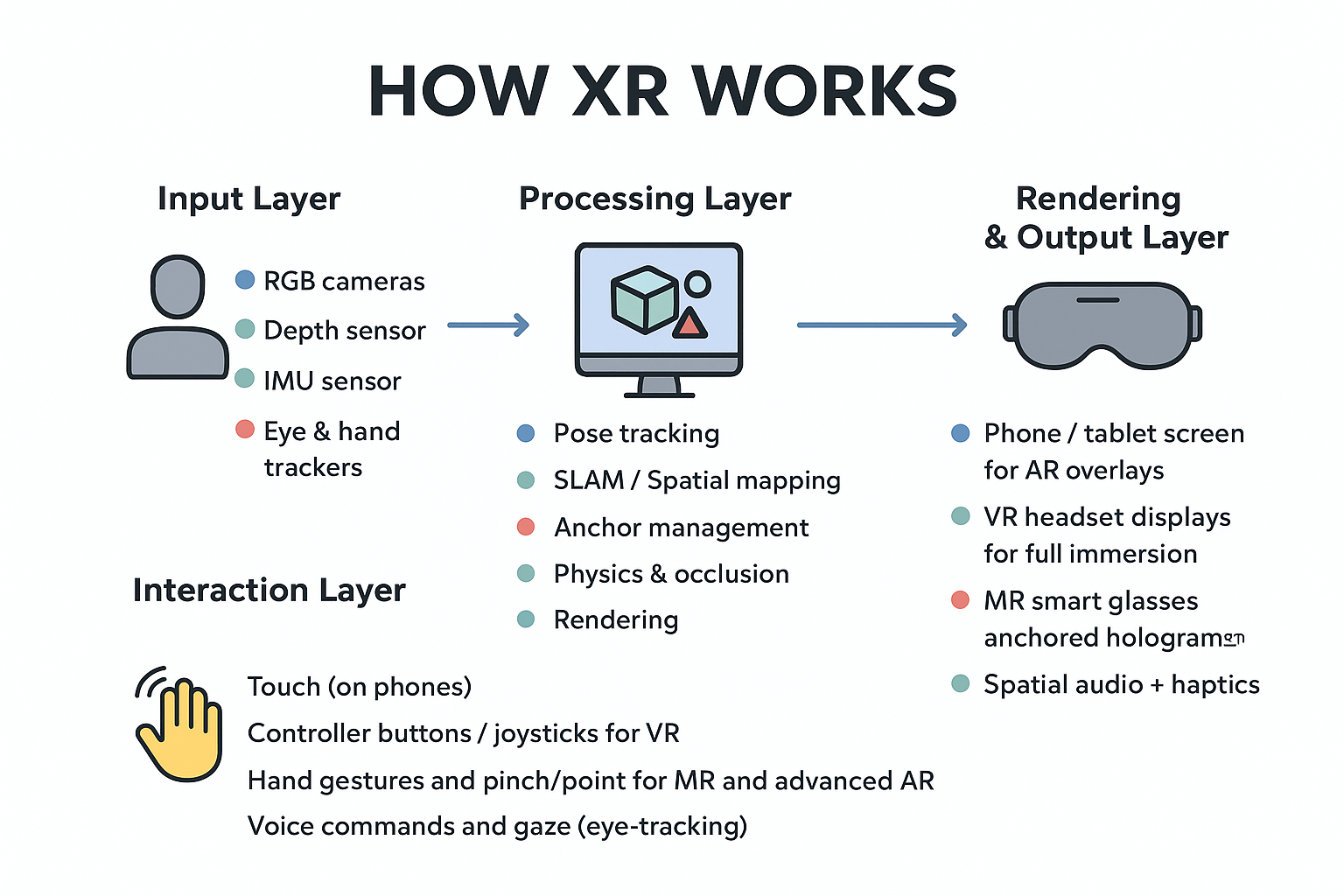
Mixed Reality is the advanced evolution of AR. Instead of just placing 3D models on top of reality, MR makes those digital objects aware of your surroundings. They bounce off walls, hide behind furniture, and respond to your movement.- Understands real-world surfaces and depth
- Allows digital content to interact with physical objects
- Requires sensors, depth cameras, and more advanced hardware
// MR hologram interacting with environment
let hologram = MR.create("robot.glb");

MR.onEnvironmentReady(() => {
    const wall = MR.detect("wall");
    hologram.setCollision(wall);
});
📌 MR vs AR & VR — Quick Comparison Table
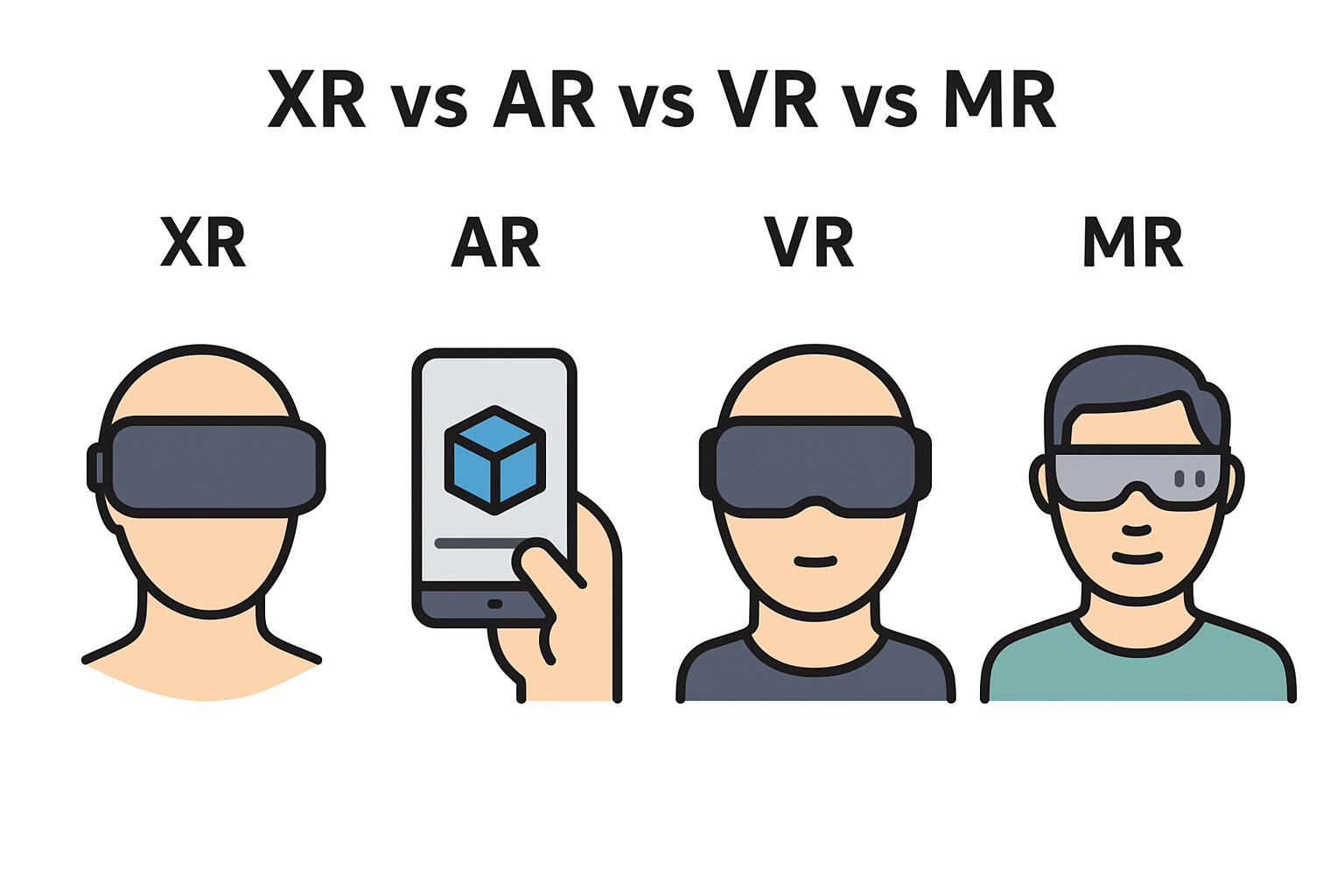
Here’s the easiest way to differentiate them:| Feature | AR | VR | MR |
| View | Real + digital overlay | Fully digital | Real + responsive digital |
| Interaction | Basic | Full immersion | Advanced physics & spatial awareness |
| Devices | Mobiles, tablets, AR glasses | VR headsets | MR headsets |
🎯 Which One Should You Use?
Choosing between MR, AR, and VR depends entirely on the project:- Use AR for filters, navigation, quick try-ons, and mobile-friendly interactions.
- Use VR for training simulators, games, therapy, and immersive storytelling.
- Use MR for engineering, medical operations, high-end training, and interactive design.
🚀 The Future of MR, AR & VR
As hardware improves and AI becomes a core part of spatial computing, the line between MR, AR, and VR will continue to blur. But for now, each technology has its own strengths—and understanding MR vs AR & VR helps businesses, creators, and developers pick the right tool for the right experience. The next wave of computing will likely blend all three, giving users digital environments that feel more natural than ever before.If you’re passionate about building a successful blogging website, check out this helpful guide at Coding Tag – How to Start a Successful Blog. It offers practical steps and expert tips to kickstart your blogging journey!
For dedicated UPSC exam preparation, we highly recommend visiting www.iasmania.com. It offers well-structured resources, current affairs, and subject-wise notes tailored specifically for aspirants. Start your journey today!

Share:


Comments
Waiting for your comments