
Mobile AR Trends
0 904
📱✨ Introduction to Mobile AR Trends
Augmented Reality (AR) on mobile devices is no longer a futuristic concept. Today, smartphones are becoming powerful AR hubs that blend digital elements with the real world. In this blog, we’ll unpack the latest Mobile AR Trends shaping industries like gaming, education, fitness, shopping, and professional training. The aim is to give you a refreshed, non-copy-pasted perspective on how AR is evolving across devices and development platforms.🚀 Evolution of Mobile AR Technology
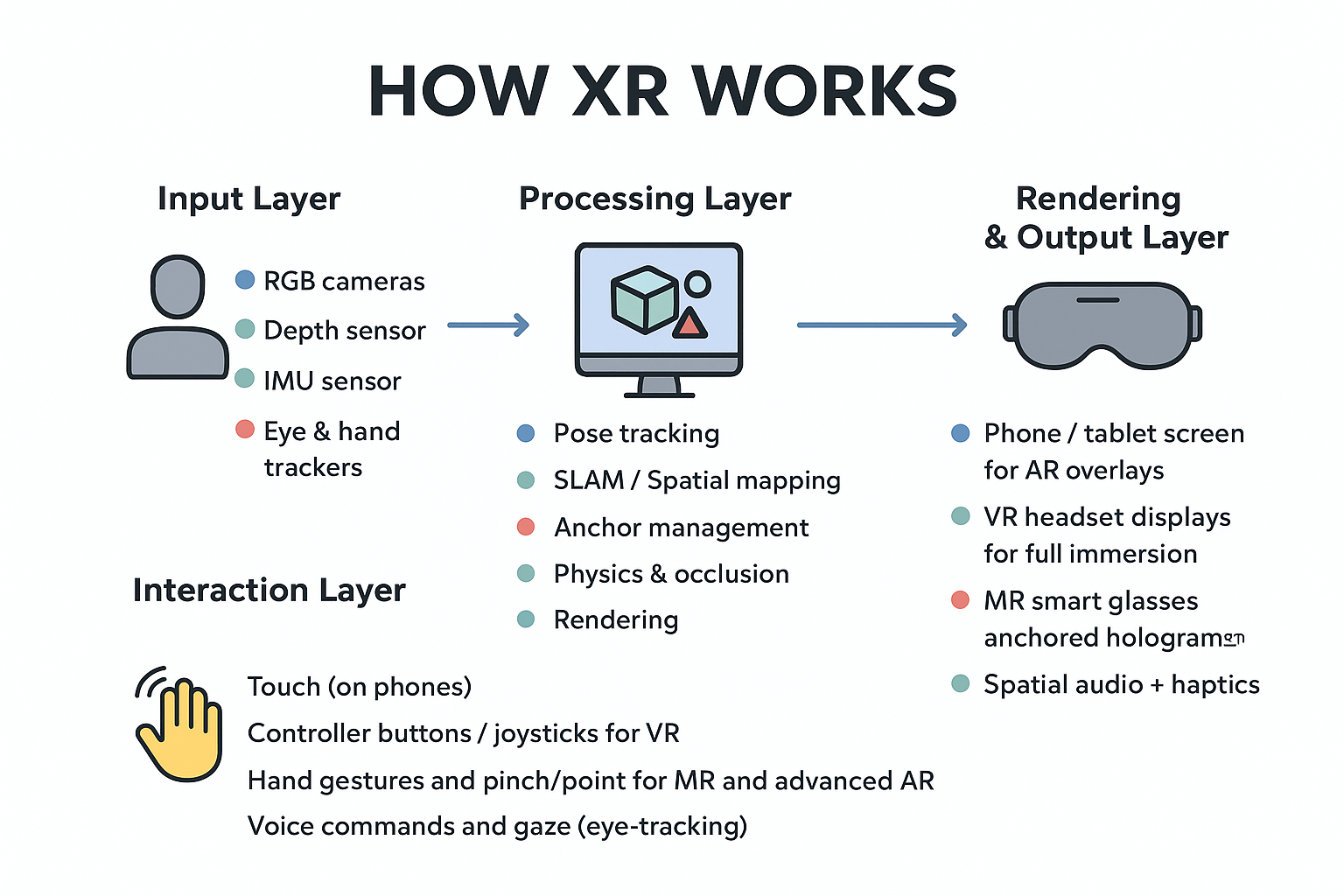
Smartphones now come with advanced processors, LiDAR sensors, high-accuracy depth mapping, and improved camera pipelines — making AR more stable and realistic than ever. AR continues to evolve through:- SLAM (Simultaneous Localization and Mapping) offering smoother tracking
- Cloud Anchors enabling shared AR experiences
- AI-driven object recognition for intelligent interactions
- Light estimation algorithms for realistic rendering
🎮 Mobile AR in Gaming
Gaming is still the biggest driver of AR adoption. Titles like Pokémon GO paved the way, but the new generation of AR games rely on highly accurate world tracking and multiplayer AR systems where users interact in shared digital layers. Here’s a simplified pseudo-code example of placing an AR character using ARCore:
// Kotlin (ARCore) - Placing a 3D model at a detected plane
override fun onTapPlane(hitResult: HitResult, plane: Plane, motionEvent: MotionEvent) {
    val anchor = hitResult.createAnchor()
    val anchorNode = AnchorNode(anchor)
    anchorNode.setParent(arSceneView.scene)

    val modelNode = TransformableNode(arFragment.transformationSystem)
    modelNode.setParent(anchorNode)
    modelNode.renderable = my3DModel
}
ðŸ›ï¸ AR in Shopping & Retail
One of the most useful Mobile AR Trends is virtual try-on and 3D product previews. Customers can now:- Try products like sneakers, sunglasses, or watches virtually
- Place furniture in their living room in true scale
- Interact with 3D models using real-time lighting
- Use AR mirrors and filters for enhanced retail engagement
👟 AR for Fitness & Sports Analytics
Fitness apps are integrating AR overlays to guide users with accurate form correction, workout step guidance, and motion analysis. Runners and athletes can view projected AR routes, pace indicators, and virtual coaches right on their mobile screens.📡 Cloud-Powered AR Experiences
A huge trend in mobile AR is cloud-based AR. With cloud anchors and real-time processing, devices can:- Share AR spaces with multiple users simultaneously
- Access large 3D assets without downloading
- Render photorealistic models using server power
- Enable city-scale AR navigation systems
🧠Navigation Through AR
AR navigation is becoming normal in malls, airports, campuses, and cities. Marker-based and markerless systems help users follow directional arrows, location tags, and digital signs — all projected onto the real environment through their mobile screens.💡 Future of Mobile AR Trends
The future will feature:- More lightweight AR SDKs
- Deeper AI integration for semantic understanding
- Better interaction accuracy using hand-tracking
- 5G-powered real-time rendering
- Hyper-personalized AR recommendations
🔚 Final Thoughts
Mobile AR Trends are transforming how we discover, learn, shop, play, and interact with the world. The fusion of advanced sensors, AI, and cloud computing has pushed AR into mainstream mobile experiences. As developers continue innovating, AR will shift from an optional feature to a primary mode of digital interaction.If you’re passionate about building a successful blogging website, check out this helpful guide at Coding Tag – How to Start a Successful Blog. It offers practical steps and expert tips to kickstart your blogging journey!
For dedicated UPSC exam preparation, we highly recommend visiting www.iasmania.com. It offers well-structured resources, current affairs, and subject-wise notes tailored specifically for aspirants. Start your journey today!

Share:



Comments
Waiting for your comments